Global sourcing standards for rubber components have changed. Price, lead time, and dimensional accuracy are still important, but they are no longer enough on their own. Buyers now need clear proof that materials meet environmental requirements, production records can be traced, and supporting documents are available when needed. If a supplier cannot provide that visibility, the risk does not disappear—it simply moves downstream into qualification delays, shipment issues, customer complaints, or compliance failures.
Why Compliance Has Become A Purchasing Requirement, Not Just A Bonus
Compliance used to be treated as supporting paperwork requested near the end of a project. Today, it is often part of the approval process from the very beginning. More companies need to confirm that the materials used in rubber parts align with environmental regulations and internal sourcing standards before orders are released.
This shift is being driven by several practical factors:
- regulations in global markets continue to tighten
- customers expect more visibility into material content and source control
- audits increasingly require supplier-side documentation
- missing or outdated declarations can delay approval and shipment
For rubber parts, this issue is especially important because compounds, additives, bonded structures, pigments, and secondary processing may all affect compliance status. A part may perform well in use, but if the documentation is incomplete or inconsistent, it can still create commercial and operational risk.
The Main Documentation Buyers Commonly Ask For
In most cases, compliance is not proven by a single certificate. It is usually supported by a group of documents that together show whether a rubber part can meet environmental, quality, and traceability expectations.
A REACH declaration helps confirm whether a product contains substances of very high concern above applicable thresholds, or whether the supplier can provide a statement aligned with current requirements. This document is particularly important for products entering European markets or supply chains that follow European compliance standards.
A reliable REACH declaration should be current, product-relevant, and tied to actual material control rather than a generic template.
RoHS compliance is commonly requested for products used in electronics, electrical assemblies, and related industrial systems. Even when the rubber component is only one part of a larger assembly, non-compliance can affect final product acceptance.
A useful RoHS statement should reflect not only the main material, but also possible effects from pigments, additives, bonded elements, coatings, or post-processing steps.
Material Traceability
Traceability makes it possible to identify where a material came from, when it was processed, and which lots may be affected if an issue appears later. For rubber products, this may include raw material batch records, production lots, tooling references, inspection history, and shipment records.
When traceability is weak, even a small issue can become difficult and expensive to contain. When traceability is clear, response time is shorter and root-cause analysis becomes more manageable.
Quality Certifications
Quality certifications are often reviewed together with compliance documents because they help indicate whether a supplier has stable systems for process control and documentation management. ISO 9001 is widely recognized as a baseline for structured quality management, while IATF 16949 is particularly relevant where stricter manufacturing discipline is expected.
| Document Type |
What It Helps Confirm |
Why It Matters |
| REACH Declaration |
Material status related to SVHC requirements |
Supports environmental compliance and market access |
| RoHS Compliance |
Control of restricted substances |
Helps reduce risk in electrical and electronic applications |
| Material Traceability |
Lot and batch visibility |
Speeds up containment and investigation if problems occur |
| Quality Certifications |
Quality system consistency |
Increases confidence in process control and documentation |
These documents are most valuable when they are connected to actual production practices, not treated as paperwork prepared only after a request is made.
How Compliance Affects Material Selection And Supplier Qualification
Compliance begins long before final documentation is issued. It influences material selection, formulation review, supplier approval, and project timing. A rubber compound may meet physical performance targets, but if it cannot support the required declarations or documentation, it may still create delays or force a material change later.
This is why compliance should be reviewed together with function, durability, and manufacturability. Material choice is no longer just a technical decision. It also affects how smoothly a project can pass qualification and move into production.
In practice, stronger supplier qualification happens when the following are aligned early:
- performance requirements
- environmental compliance expectations
- documentation availability
- change control and traceability
- quality system maturity
When these elements are considered at the same time, the project is more likely to stay stable from development through shipment.
Why Transparency Helps Reduce Risk In Global Supply Chains
Transparency reduces uncertainty across the entire supply chain. When material status, production records, and compliance documents are clearly managed, communication becomes faster and qualification becomes easier. Problems are also easier to isolate before they expand into larger cost, delivery, or reputation issues.
This matters even more in global supply chains, where one rubber component can affect multiple assemblies, different export destinations, and customer-specific compliance requirements. A transparent supplier helps reduce the chance of late-stage surprises, especially after tooling is completed or production has already started.
For this reason, many buyers now prefer suppliers that can combine manufacturing capability with documentation discipline. Zong Yih reflects this direction well, with strengths that support both product execution and compliance-related expectations:
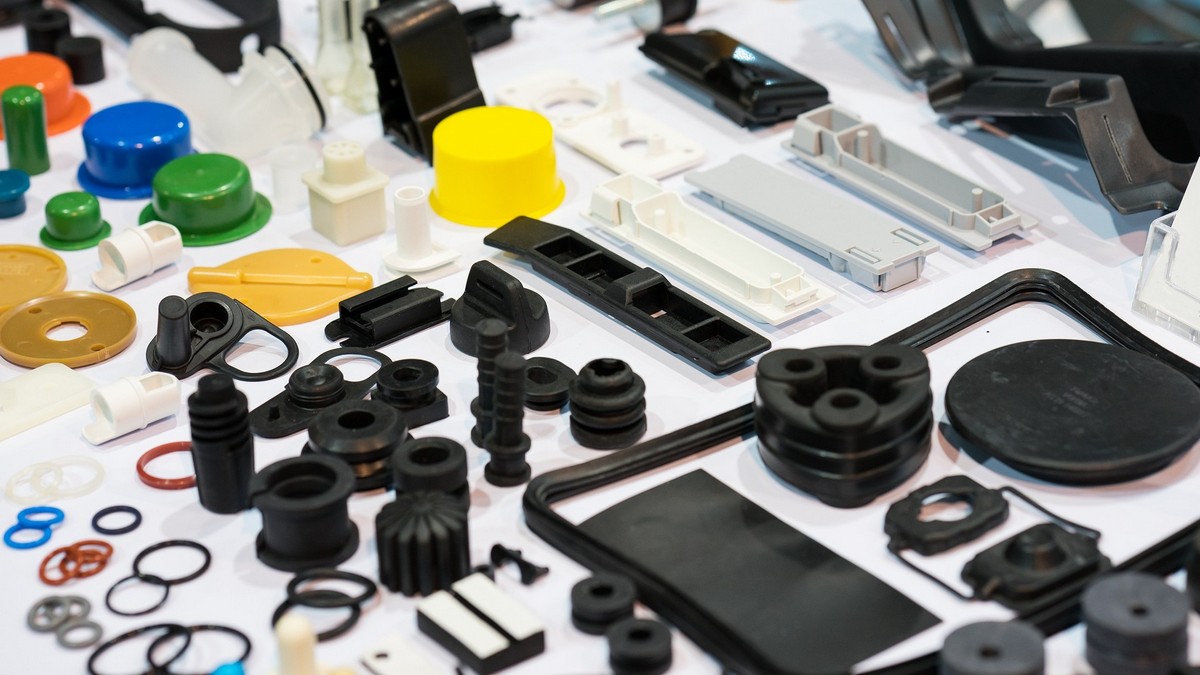
- custom molded rubber parts and rubber-to-metal bonded parts for diverse industrial applications
- OEM and ODM support from material selection to design, tooling, production, and packaging
- integrated manufacturing capability with secondary processing services
- in-house mold development that helps improve lead time, process control, and response speed
- quality management backed by ISO 9001 and IATF 16949
- support for international market needs, including documentation for REACH, RoHS, and other environmental requirements
These strengths are important because compliance is rarely solved by documents alone. It usually depends on how well materials, processes, records, and quality systems are managed together.
Why Documentation And Process Control Now Define Supplier Reliability
Reliable rubber part supply now depends on more than production capability. It also depends on whether documentation is current, material control is clear, and traceability is strong enough to support long-term business. REACH, RoHS, ESG expectations, and transparency are no longer secondary concerns. They have become part of the standard requirements for supplier approval and supply chain risk control.
Suppliers that can support both technical performance and document readiness will be in a stronger position to meet global expectations and support more stable business relationships over time.




(3796)(20260924)(原).jpg)
(4005)(20260924)(原).jpg)