Smart Tool Management: From Passive Assets to an Intelligent Data Ecosystem
Introduction: Beyond the Hardware Mindset

The conversation around smart manufacturing often fixates on tangible assets—the robotic arm, the CNC machine, the sensor-laden conveyor. This hardware-centric view, however, can overlook the most critical element: the information architecture that breathes intelligence into these physical systems. Nowhere is this gap more evident than in tool management. For decades, the cutting tool has been a "black box"—a necessary but passive consumable. The true transformation in the smart factory era is not merely about tracking tools, but about fundamentally reimagining them as active, data-generating components within a larger cyber-physical system.
This article moves beyond vendor-specific solutions to explore the architectural principles and systemic value of intelligent tool management, arguing that its success depends less on any single piece of hardware and more on the seamless flow and intelligent analysis of data across the entire production ecosystem.
Part 1: The Paradigm Shift – From Inventory to Information Asset
The evolution of tool management mirrors the broader journey of industrial digitization, which progresses from basic digitalization to connected, and finally, intelligent systems. This framework helps clarify the true goal.
- Level 1: Digitalization (The Digital Twin of State): This foundational step involves creating a static digital record for each physical tool—a "birth certificate" with its ID, specifications, and location. It solves basic traceability but offers little dynamic insight.
- Level 2: Connectivity (The Digital Thread of Process): Here, tools are integrated into the operational flow. Data is generated and linked at each touchpoint: presetting offsets, machine utilization hours, and maintenance actions. This creates a history, enabling process transparency.
- Level 3: Intelligence (The Cognitive System): This is the culmination, where data from tools is fused with data from machines, quality controls, and production schedules. Advanced analytics and AI apply this fused data stream to predict failure, optimize performance, and prescribe actions, transforming tool management from a reactive cost center into a proactive source of competitive advantage.
Part 2: Core Systemic Requirements of an Intelligent Tool Management System
Building a system that achieves Level 3 intelligence requires addressing several non-negotiable architectural requirements that transcend brand names.
- Uncompromising Data Fidelity and Standardization: The system's output is only as good as its input. Data captured at the tool edge—whether from RFID, QR codes, or integrated sensors—must be accurate and adhere to global standards (like ISO 13399 for tool data) to ensure interoperability across different machines and software platforms.
- Seamless Horizontal and Vertical Integration: Intelligence emerges from connection. The tool management system must integrate horizontally with adjacent systems (ERP for inventory, MES for scheduling, CMM for quality data) and vertically from the shop floor to the cloud. This breaks down data silos and creates a unified information landscape.
- Closed-Loop Optimization and Predictive Power: The ultimate goal is a self-optimizing loop. The system must not only report that a tool is worn but must also learn from historical patterns to predict wear within specific job contexts. This predictive capability allows for just-in-time tool changes, preventing downtime and maximizing tool life without compromising quality.
Part 3: The Technology Architecture – Building the Data Value Chain
The following table outlines the layered architecture of a modern tool intelligence platform, highlighting how data gains value as it moves through the system.
The Tool Intelligence Platform: A Layered Architecture
| Architecture Layer |
Key Function |
Technology Enablers & Output |
| 1. Perception & Identity Layer |
Provides the unique digital identity and captures raw state data from the physical tool. |
QR/DMC Codes, RFID, IoT Sensors (vibration, temperature). Output: "Tool A123 is at Station 5 and has run for 4.2 hours." |
| 2. Connectivity & Integration Layer |
Securely transmits and translates data between machines, sensors, and software systems. |
OPC UA, MTConnect, APIs, Edge Gateways. Output: "Tool A123's vibration data from Machine X is synchronized with its job record in the MES." |
| 3. Data Aggregation & Analytics Layer |
Correlates tool data with machine, process, and quality data to generate insights. |
Cloud/Edge Computing, Data Lakes, Descriptive & Diagnostic Analytics. Output: "The surface finish deviation on Job #42 correlates with the final 30 minutes of Tool A123's usage cycle." |
| 4. Intelligence & Application Layer |
Applies advanced algorithms to enable predictive and prescriptive actions. |
Machine Learning Models, AI, Digital Twin Simulation. Output: "Model predicts Tool A123 has a 92% probability of failure within 45 minutes. Prescription: Replace at next stoppage with Tool B456 from AS/RS Bay 12." |
Part 4: The Evolving Market Landscape – Specialists, Integrators, and Enablers
With this architectural model in mind, the market can be viewed not just as a list of competitors, but as a collaborative ecosystem of specialists, each contributing to part of the value chain.

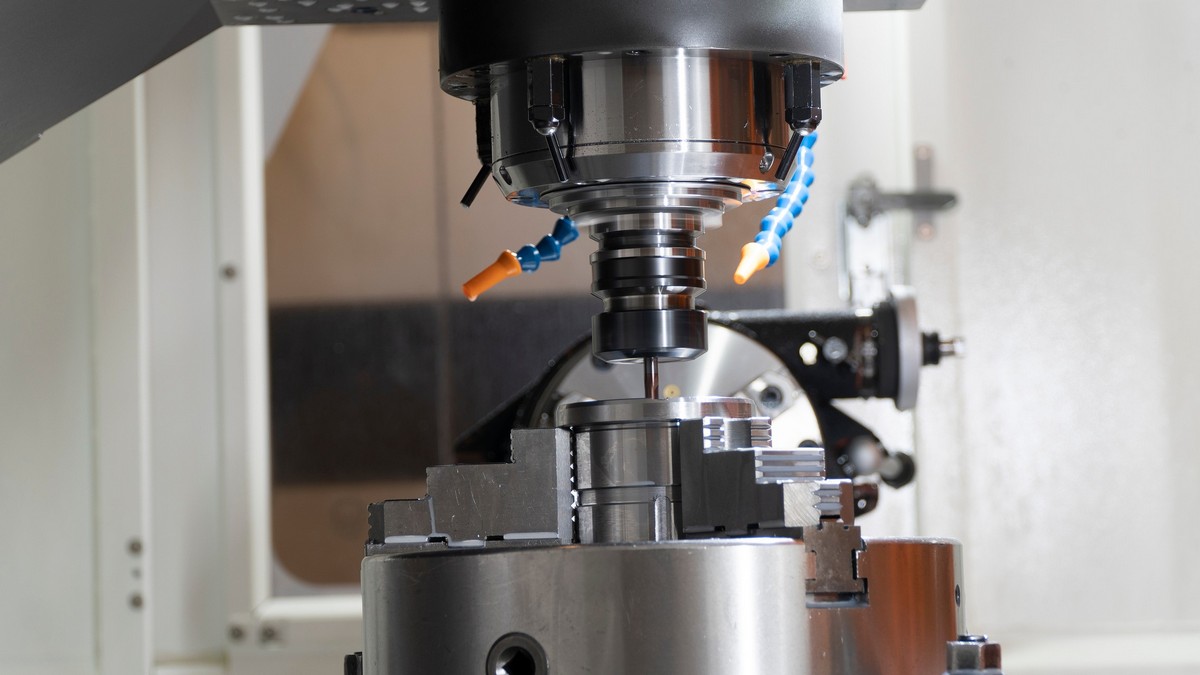
- The Precision Engineering Specialist: These are the foundational manufacturers of the physical tool holders—the chucks, collets, and boring tools that form the critical interface between machine and cutting edge. Their value is rooted in decades of metallurgical and mechanical expertise, delivering the rigidity, balance, and reliability upon which all data-driven insights depend. A stable, high-performance tool is the prerequisite for collecting consistent, meaningful data.
- The Technology & Software Integrator: This group builds the "central nervous system." They provide the software platforms, presetting stations with integrated identification, and tool management databases that aggregate information. Their focus is on creating an open, interoperable platform that can manage tools from any manufacturer and connect to any major machine tool brand.
- The Enterprise Solution Provider: Often large, established industrial conglomerates, they aim to offer a fully integrated suite—from their own branded tools and tooling systems to proprietary software and analytics. Their proposition is a one-stop-shop, tightly controlled ecosystem designed for maximum seamless operation within their own product universe.
- The Analytics & AI Enabler: An emerging category, these are specialized tech firms providing advanced AI models, predictive maintenance algorithms, and cloud analytics services. They may partner with any of the above to add a layer of intelligence to existing tool management systems.
Conclusion: The Collaborative Path to Intelligence
The journey to intelligent tool management is not a single-vendor purchase but a strategic integration project. It requires a clear vision of the desired data flows and business outcomes, followed by the careful assembly of best-in-class components: impeccably engineered physical tooling for reliable performance, an open and robust software platform for data integration, and sophisticated analytics to extract actionable intelligence.
In this systems-oriented view, the role of the precision tooling manufacturer remains indispensable but distinct. Companies excelling in this domain, such as Ann Way Machine Tools with its decades-long focus on high-precision CNC tool holders, provide the essential, high-integrity physical assets. In a smart factory, their expertly manufactured chucks and collets become more than just holders; they become the stable, predictable data sources at the very edge of the cutting process. The true "smartness" of the factory is realized when this foundational hardware excellence is connected through intelligent software, creating a system where every component, from the tool tip to the executive dashboard, is aligned to drive efficiency, quality, and insight.
To explore high-precision tool holders that provide the reliable foundation for any smart manufacturing system, visit Ann Way Machine Tools at https://www.annwaytools.com/.




(3796)(20260924)(原).jpg)
(4005)(20260924)(原).jpg)