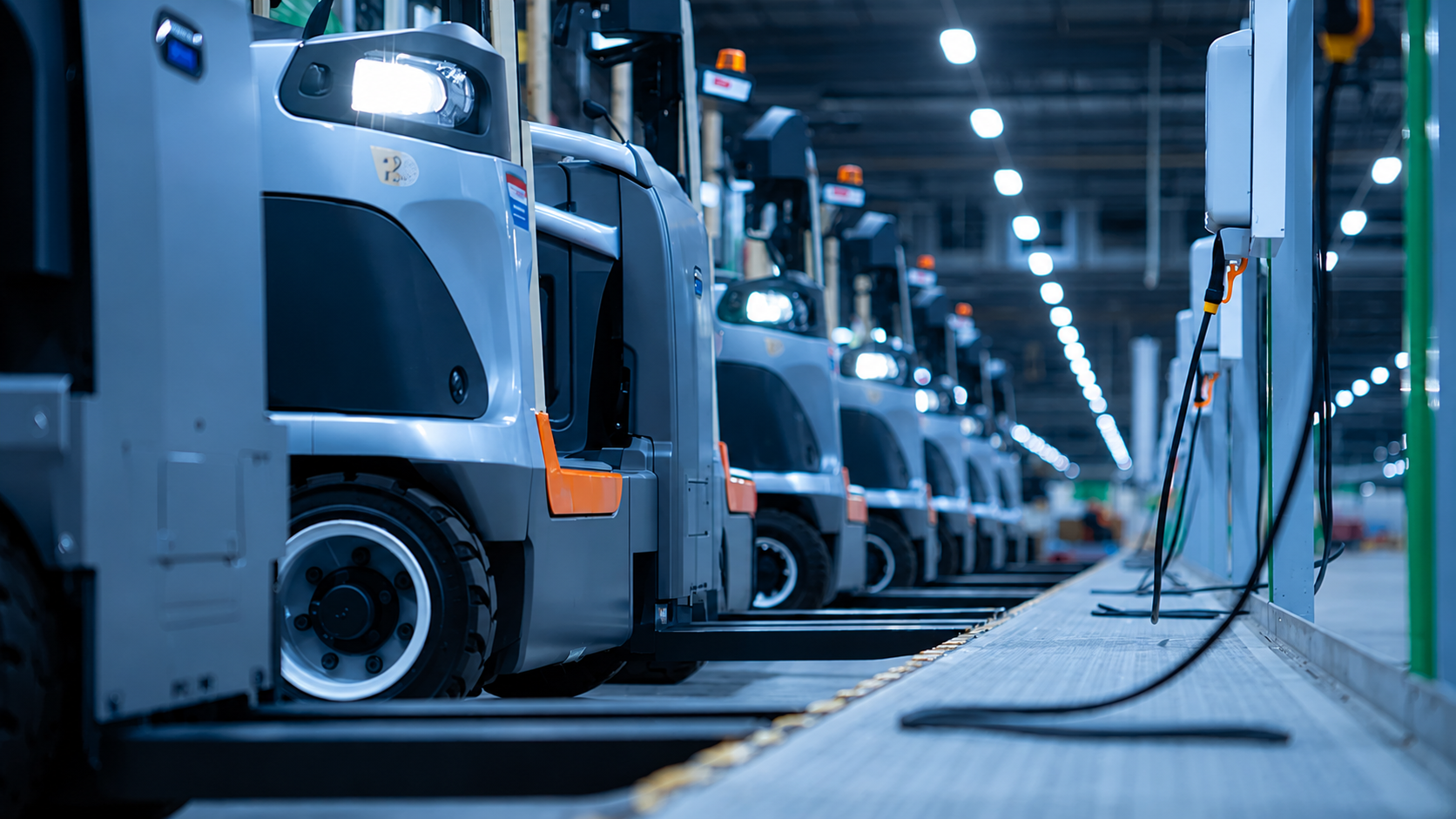
As warehouses, factories, and logistics operators accelerate electrification, the discussion is no longer limited to whether companies should move from internal combustion forklifts to battery-powered models. The more practical question today is: which battery technology can better support uptime, safety, labor efficiency, and long-term cost control? For many buyers, lithium-ion is becoming the preferred answer. The electric forklift market is evolving from a simple power-source comparison into a broader evaluation of charging speed, maintenance workload, space planning, shift coverage, and total cost of ownership. Against this backdrop, lithium-ion technology is gaining strong momentum, especially in electric counterbalance forklift applications where stable performance, operational flexibility, and low downtime are critical. This article examines why lithium-ion is becoming a leading technology in electric forklifts, with a particular focus on charging and maintenance—the two issues procurement teams, plant managers, and business owners most often need to evaluate before making an investment.
Electric Forklift Adoption Is Becoming a Practical Business Decision
The shift toward electrification is being driven by several business realities: stricter environmental expectations, rising demand for cleaner indoor operations, increasing labor efficiency pressure, and the need for more predictable equipment management.
For many industries—including warehousing, food processing, retail distribution, electronics manufacturing, pharmaceuticals, and light industry—an electric forklift offers several practical advantages:
● Lower tailpipe emissions and cleaner indoor operation
● Reduced noise compared with engine-powered models
● Better suitability for enclosed facilities and mixed-use environments
● Potentially lower maintenance requirements
● Easier alignment with ESG and sustainability targets
However, not all electric forklifts deliver the same ownership experience. Traditional lead-acid batteries played an important role in the early growth of electric forklift fleets, but they also introduced common operational burdens such as long charging cycles, battery watering, manual battery changing, and dedicated battery-room management. These limitations are a major reason lithium-ion has become a growing focus in the market.
Why Lithium-Ion Is Gaining Ground in Electric Forklift Fleets
Lithium-ion batteries are receiving greater attention because they are not only a newer power solution, but also a way to reduce friction in day-to-day operations. For buyers considering an electric counterbalance forklift, battery technology now affects more than runtime—it also affects labor planning, charging routines, and overall workflow efficiency.
Faster Charging Helps Improve Equipment Uptime
In many warehouse and factory environments, every hour of equipment availability matters. Traditional lead-acid systems often require long charging windows and, in some operations, spare batteries for multi-shift coverage. Lithium-ion changes this model by offering more flexible charging options.
Common charging-related benefits include:
● Faster charging times
● Opportunity charging during breaks or shift changes
● Reduced need for battery swapping in many applications
● Greater flexibility in charging schedules
For procurement teams, this matters because uptime directly influences labor productivity, fleet size, and operational throughput. If an electric forklift can return to work faster after charging, companies may be able to reduce backup equipment requirements and simplify fleet scheduling.
Lower Routine Maintenance Burden
Another major reason lithium-ion is becoming more attractive is its lower day-to-day maintenance burden. Traditional lead-acid batteries usually require regular watering, equalization charging, corrosion checks, and careful handling procedures. These tasks consume labor time and can create avoidable safety or performance issues if not managed correctly.
Lithium-ion systems are often preferred because they can reduce or eliminate the need for:
● Battery watering
● Acid spill concerns
● Equalization charging routines
● Heavy battery replacement procedures
● Maintenance related to battery-room ventilation needs
For many businesses, this is not only a technical benefit but also an operational one. Lower battery maintenance requirements can reduce interruptions, simplify operator routines, and lower the risk of battery-related handling errors.
More Stable Performance for High-Intensity Operations
For operations that run long hours or handle peak-period demand, performance consistency is essential. Fleet managers need equipment that can support stable travel, lifting, and handling performance throughout the shift.
This is one reason lithium-ion has become increasingly attractive for electric counterbalance forklift applications. A more stable and predictable power profile can help companies achieve:
● More consistent equipment availability
● Reduced downtime linked to battery handling
● Better support for multi-shift or high-throughput operations
● Improved fleet planning and scheduling confidence
Charging Considerations: What Buyers Should Review Before Choosing Lithium-Ion
Although lithium-ion offers strong advantages, the best buying decision still depends on the actual operating environment. Before investing, procurement teams should assess whether the site’s infrastructure and work pattern can fully support the technology.
1. Charging Infrastructure Compatibility
Before choosing a lithium-ion electric forklift, buyers should confirm:
● Facility power capacity
● Charger compatibility
● The number of charging points required
● Daily usage cycles and peak charging periods
● Future fleet expansion needs
Battery technology may be advanced, but infrastructure planning remains essential. A well-matched charging environment is necessary to maximize uptime and protect return on investment.
2. Shift Pattern and Opportunity Charging Strategy
Not every business operates on the same schedule. Some facilities run a single shift, while others run double or triple shifts. Lithium-ion can offer more value when charging opportunities are built into the daily workflow.
Questions buyers should consider include:
● How many hours does each truck operate per day?
● Are there scheduled breaks or downtime windows for charging?
● Is the fleet expected to support continuous or near-continuous operation?
● Does the company want to avoid battery swapping?
If the operation involves high utilization, multiple shifts, or limited tolerance for downtime, lithium-ion may offer a stronger business case.
3. Battery Management and Safety Systems
Not all battery systems offer the same level of safety or long-term reliability. Buyers should look beyond basic performance claims and review the supplier’s battery management system, thermal protection design, warranty terms, and service capability.
Important areas to evaluate include:
● Battery management system (BMS) quality
● Temperature and overcharge protection
● Local or regional service support
● Warranty coverage and conditions
● Compliance with applicable market and safety standards
For B2B buyers, reliable documentation and after-sales support are just as important as product specifications.
Maintenance Considerations: Why Lithium-Ion Is Changing the Ownership Model
Many forklift buyers initially compare machines based on price and load capacity. However, long-term ownership cost is often shaped more by maintenance routines, labor demands, and downtime than by purchase price alone.
Lower Battery Maintenance Can Reduce Hidden Costs
Battery-related work may seem routine, but it can create significant hidden costs over time. Daily inspection, watering, charging management, battery changes, and maintenance planning all require labor and discipline.
Lithium-ion can help reduce hidden costs associated with:
● Daily or weekly battery maintenance tasks
● Dedicated battery-room management
● Extra labor for battery changing
● Productivity loss caused by charging and cooling delays
● Performance issues related to improper battery care
This is one reason more buyers are evaluating forklift investments through total cost of ownership, rather than acquisition price alone.
Fewer Manual Battery Procedures Improve Operational Efficiency
The fewer manual steps required, the easier it becomes to standardize operations and reduce training complexity. For site managers, battery systems that require less intervention are easier to integrate into leaner workflows.
This is why a modern electric forklift strategy is no longer only about replacing fuel with electricity. It is also about simplifying the daily process around the truck.
Service Support Still Matters
Lower maintenance does not mean zero maintenance. Buyers should still review whether the supplier can provide:
● Technical service support
● Fast diagnostics and troubleshooting
● Spare parts availability
● Charger-related service support
● Application knowledge based on actual site conditions
Lithium-ion should be evaluated as part of a full equipment and support ecosystem, not only as a battery feature.
Is Lithium-Ion Always Better Than Lead-Acid?
Not automatically. The most suitable battery type still depends on operating intensity, budget structure, facility conditions, and overall business goals.
Lead-acid may still be suitable in operations where:
● Daily usage is relatively light
● Initial capital budget is highly limited
● Existing battery rooms and change systems are already in place
● The operation does not require high uptime flexibility
However, lithium-ion often becomes more attractive when:
● Uptime is critical
● Labor efficiency is a priority
● Multi-shift operation is common
● Battery maintenance is a burden
● Space is limited
● ESG and clean-operation goals are important
For many businesses, the question is no longer whether electrification is viable, but whether older battery systems can still support today’s operational pace.
How Procurement Teams Should Compare Electric Forklift Options
When sourcing an electric counterbalance forklift, buyers should use a more practical comparison framework rather than focusing only on model price or specification sheets.
1. What is the actual duty cycle?
Do not rely only on brochure data. Evaluate how many hours the truck works each day, how often it handles heavy loads, and whether peak hours create charging pressure.
2. How much downtime can the operation tolerate?
If the business depends on fast workflow and consistent throughput, charging flexibility may be more valuable than a lower upfront purchase price.
3. How much labor is currently spent on battery management?
If staff time is being consumed by watering, inspection, battery swapping, and charging supervision, lithium-ion may improve both efficiency and cost control.
4. Is the company evaluating total cost of ownership?
A proper comparison should include:
● Charging efficiency
● Maintenance labor
● Downtime risk
● Spare battery requirements
● Infrastructure cost
● Long-term productivity value
5. Can the supplier support long-term performance?
A reliable supplier should offer more than a machine. Buyers should evaluate product range, application knowledge, after-sales support, and responsiveness.
FAQ: Common Questions About Lithium-Ion Electric Forklifts
1. Why is lithium-ion becoming more popular in electric forklifts?
Lithium-ion is becoming more popular because it can support faster charging, lower battery-related maintenance, and more efficient uptime management. These advantages are especially important in busy warehouse and industrial environments.
2. Does a lithium-ion electric forklift charge faster than a lead-acid model?
In many applications, yes. Lithium-ion systems generally support faster charging and opportunity charging, which can help reduce downtime during shifts or operating breaks.
3. Does lithium-ion reduce forklift maintenance?
Lithium-ion can reduce battery-related maintenance because it typically removes the need for watering, reduces manual battery handling, and simplifies daily battery care.
4. Is lithium-ion suitable for multi-shift operations?
It can be highly suitable for multi-shift applications, especially when businesses need flexible charging, lower downtime, and less battery handling complexity.
5. Is lithium-ion more expensive to purchase?
Initial purchase cost may be higher in some cases, but many buyers evaluate lithium-ion based on total cost of ownership rather than upfront price alone.
6. What should buyers check before choosing a lithium-ion forklift?
Buyers should review the duty cycle, charging infrastructure, battery management system, warranty, after-sales support, and how well the solution fits actual site conditions.
Final Thoughts: Lithium-Ion Is Reshaping Electric Forklift Decision-Making
Lithium-ion is leading the electric forklift shift because it addresses the operational issues that matter most in real working environments: charging delays, battery maintenance burden, uptime pressure, labor efficiency, and ownership complexity. For procurement teams, the appeal of lithium-ion is not simply that it is newer, but that it can better match the demands of modern warehouses, factories, and logistics facilities.
For companies evaluating an electric forklift or electric counterbalance forklift, it is worth reviewing suppliers that offer a broad product range and practical application support. Tailift Material Handling Taiwan Co., Ltd. is one of the established manufacturers in this field, offering electric counterbalance forklift models designed for different handling needs, with a focus on stability, productivity, and operational performance. Readers interested in exploring Tailift’s electric forklift solutions now. For further product information, application consultation, or purchasing inquiries, readers can also contact Tailift.