The best pump choice prevents more than leaks. It helps prevent downtime, damaged equipment, and costly process interruptions.
Choosing a pump for hydrochloric acid, sulfuric acid, caustic soda, plating solutions, etchants, or other corrosive chemicals should never be based on flow rate alone.
A pump may meet the required capacity and still fail early. The usual causes are familiar: the wetted material is not compatible with the chemical concentration, the liquid is hotter than expected, the suction condition is poor, or the pump runs dry during a normal operating upset.
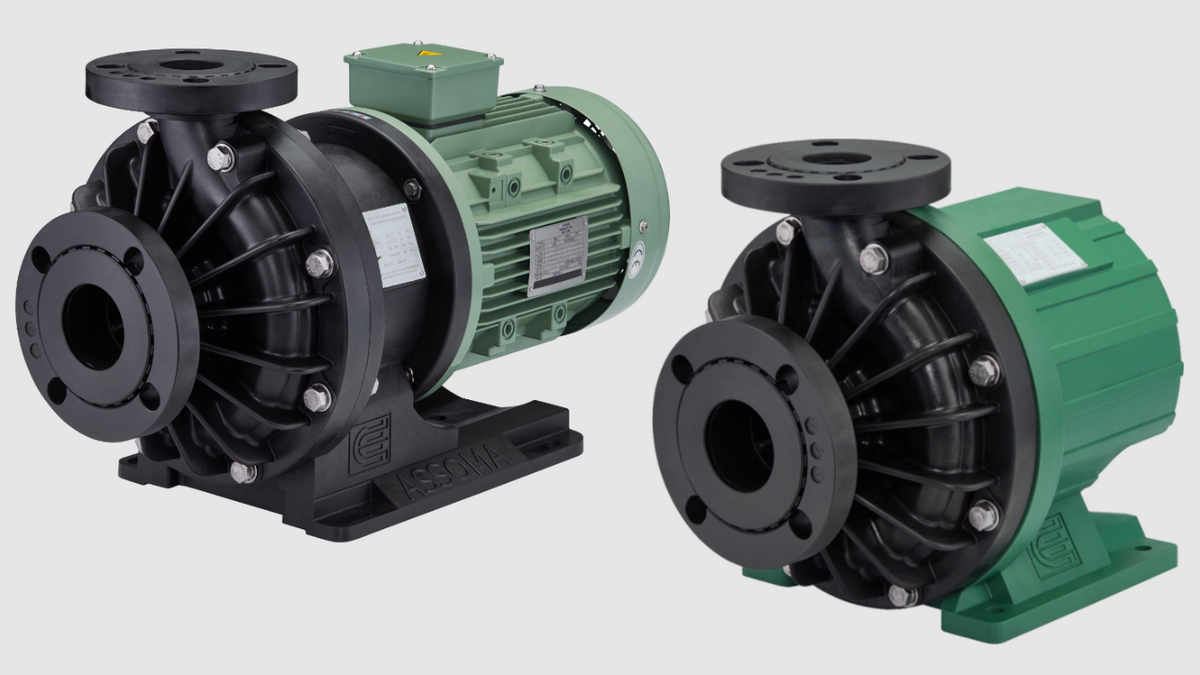
For applications where chemical containment matters, a centrifugal magnetic drive pump is often a practical option. It transfers motor power through a magnetic coupling instead of a conventional rotating shaft seal. This removes a common leak path and makes the design well suited to many corrosive, hazardous, toxic, and high-purity liquid transfer duties.
However, seal-less does not mean maintenance-free. A reliable selection still depends on correct material choice, hydraulic sizing, installation, and protection against abnormal operation.
Start with the actual chemical, not a general description
Terms such as “acid,” “alkali,” “etchant,” or “chemical wastewater” do not give a pump supplier enough information to make a safe recommendation.
The same chemical can behave very differently at another concentration or temperature. A material that is suitable for dilute acid at room temperature may not be suitable for a concentrated acid at elevated temperature. Solvents, oxidizers, crystals, metal ions, and mixed chemicals can also change the answer.
Before requesting a quotation, prepare the following information:
- Exact chemical name and concentration
- CAS number, when available
- Normal and maximum operating temperature
- Required flow rate
- Total dynamic head
- Density or specific gravity
- Viscosity at operating temperature
- Vapor pressure, if the liquid is volatile
- Solids, crystals, gas bubbles, or contaminants
- Suction tank level and suction piping layout
- Operating hours and start-stop frequency
- Cleaning chemicals and possible upset conditions
- Electrical and hazardous-area requirements
A Safety Data Sheet is a useful starting point, but it does not replace a material compatibility review. The pump supplier should confirm suitability for the exact chemical, concentration, temperature, and pressure range.
Choose wetted materials based on the full operating condition
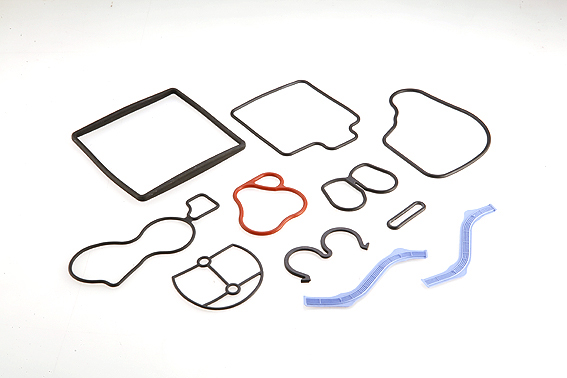
A chemical pump is only as resistant as its wetted parts. The casing matters, but so do the impeller, bearings, shaft sleeve, O-rings, gaskets, containment shell, and any wetted accessories.
The table below provides a practical starting point for common plastic and fluoropolymer materials.
| Material |
Typical use |
Main advantage |
Important consideration |
| PP, polypropylene |
Ambient-temperature acids, alkalis, wastewater, plating liquids |
Cost-effective and resistant to many aqueous chemicals |
Confirm suitability for high temperatures, oxidizers, and solvents |
| PVDF |
More demanding chemical duties and higher temperatures |
Strong chemical resistance and good mechanical strength |
Usually costs more than PP; confirm specific solvent compatibility |
| ETFE |
Lined pumps and aggressive chemical service |
Good chemical resistance and mechanical toughness |
Check the lining construction, temperature, and pressure limits |
| PTFE |
Strong acids, alkalis, solvents, and highly corrosive chemicals |
Very broad chemical resistance |
Equipment design and pressure-temperature limits remain important |
| PFA |
High-purity chemicals and specialty process applications |
Broad resistance and high-purity characteristics |
Often selected for demanding applications with higher material cost |
As a general guide, PP is often considered for many ambient-temperature acid and alkali duties. PVDF is often selected when the chemical environment is more demanding or temperature is higher. PTFE, PFA, and ETFE are commonly evaluated for highly corrosive chemicals, solvents, and high-purity service.
The right material is not automatically the most expensive one. The right material is the one that can operate safely and reliably in the real process.
Size the pump from the system, not from the previous pump nameplate
When replacing an old pump, it is tempting to buy the same model, motor size, or discharge size. That approach can repeat an existing problem.
The old pump may have been oversized from the beginning. It may have been throttled by a discharge valve for years. Or the process may have changed since the original installation.
For a centrifugal magnetic drive pump, two hydraulic values are essential:
- Flow rate: the volume of liquid required over time.
- Total dynamic head: the energy needed to move the liquid through the entire system.
Total dynamic head includes:
- Elevation difference between source and destination
- Pressure difference between tanks or process equipment
- Friction losses in piping
- Losses from valves, elbows, filters, heat exchangers, and instruments
- Required delivery pressure
Ask the supplier for a pump curve and confirm the proposed duty point. A pump should operate within its recommended range, not at the far end of the curve. Poor hydraulic matching can lead to vibration, heat, unstable flow, and increased wear.
Check temperature, vapor pressure, and NPSH
Temperature affects material resistance, liquid viscosity, vapor pressure, and internal lubrication conditions.
For hot or volatile liquids, suction design is critical. If the pressure at the pump inlet is too low, the liquid can form vapor bubbles. When these bubbles collapse inside the pump, cavitation can occur.
Cavitation may cause noise, vibration, unstable flow, impeller damage, and reduced pump life.
The basic requirement is:
NPSH available > NPSH required
NPSH available depends on the actual installation, including tank pressure, liquid level, temperature, suction pipe losses, and vapor pressure. NPSH required is determined by the pump design and operating point.
To reduce cavitation risk:
- Keep suction piping short and direct.
- Use an adequately sized suction line.
- Minimize restrictions on the suction side.
- Inspect strainers and filters regularly.
- Install the pump close to the source tank when possible.
- Recheck NPSH when liquid temperature or process conditions change.
Protect the pump from dry running and magnetic decoupling
Dry running
Many magnetic drive pumps use the process liquid to lubricate and cool internal bearings. If the pump runs without liquid, internal friction and temperature can rise quickly.
Dry running may occur when:
- The suction tank runs empty.
- The pump starts before it is primed.
- A suction line loses prime.
- A filter becomes blocked.
- Gas enters the liquid.
- An operator starts the pump with an incorrect valve position.
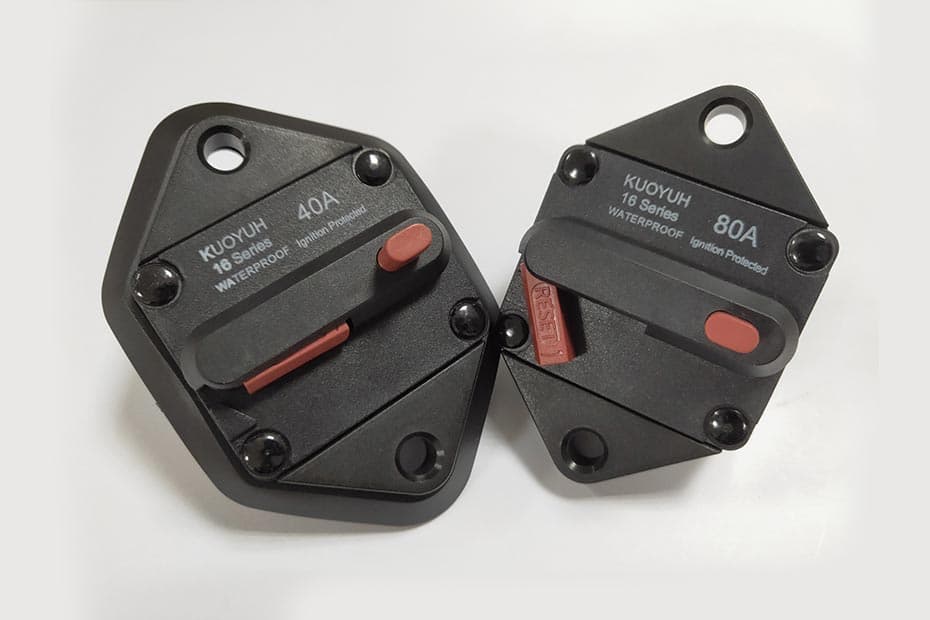
If these conditions are possible, consider low-level protection, a flow switch, motor monitoring, or a dry-run protection device.
Magnetic decoupling
The magnetic coupling can transmit only a limited amount of torque. If system resistance rises too high, the liquid becomes more viscous than expected, or solids block the impeller, the inner and outer magnets can lose synchronization.
To prevent decoupling, provide the supplier with maximum density, maximum viscosity, maximum head, start-up conditions, and possible blocked-line scenarios.
Do not overlook solids and crystallization
A standard chemical magnetic drive pump is not automatically suitable for abrasive solids, slurry, or liquids that crystallize during shutdown.
Fine particles can wear internal bearings. Crystals can build up inside the pump and prevent the impeller from turning when the system restarts.
If the liquid contains solids, provide:
- Particle size
- Solids concentration
- Particle hardness
- Settling behavior
- Likelihood of crystallization during low-temperature operation or shutdown
This information helps the supplier determine whether a standard centrifugal magnetic drive pump is suitable or whether another configuration is needed.
A practical RFQ checklist
| RFQ item |
Why it matters |
| Chemical name, concentration, and SDS |
Confirms material compatibility |
| Normal and maximum temperature |
Defines material, gasket, and operating limits |
| Required flow and total dynamic head |
Establishes the duty point |
| Density and viscosity |
Affects power, performance, and magnetic torque |
| Vapor pressure and NPSH available |
Helps prevent cavitation |
| Solids, crystals, and gas content |
Evaluates internal component suitability |
| Pipe size and piping arrangement |
Supports realistic system calculations |
| Operating cycle |
Identifies protection and maintenance needs |
| Electrical and area classification |
Ensures correct motor and accessory selection |
| Cleaning and upset conditions |
Confirms compatibility beyond normal operation |
ASSOMA INC. as a pump selection resource
ASSOMA INC. is a Taiwan-based manufacturer of seal-less magnetic drive pumps for corrosive, hazardous, and toxic chemical handling. Its product range includes plastic chemical pumps, lined pumps, chemical filter systems, and pump monitoring accessories for industries such as PCB manufacturing, chemical processing, surface treatment, and environmental engineering.
Buyers comparing material options, performance ranges, and protection requirements can review ASSOMA’s centrifugal magnetic drive pump product range.
As with any pump supplier, a complete chemical and process data sheet should be provided before final selection. Request written confirmation of wetted materials, operating limits, and recommended protection devices.
FAQ
Is a seal-less pump always better than a mechanical seal pump?
No. A seal-less pump is often a strong choice when reducing leakage risk is important. The best pump type still depends on the liquid, temperature, pressure, solids, maintenance practices, and process requirements.
Is PP suitable for every acid and alkali?
No. PP works well with many aqueous acids and alkalis, but concentration, temperature, oxidizing strength, and solvent content can change its suitability.
Why does viscosity matter?
Higher viscosity can reduce pump performance and increase power demand. It can also affect magnetic coupling torque. Do not select a pump from a water-based curve when the actual liquid is much more viscous.
Can a magnetic drive pump run dry briefly?
It is not recommended. Many magnetic drive pumps depend on the liquid for cooling and lubrication. Even short dry-running events may damage internal components.




.jpg)
.jpg)