A Practical Buying Guide for Engineers, OEM Teams, and Industrial Buyers
When engineers, OEM developers, and procurement teams evaluate Custom Worm Gears, they are usually not just choosing a gear—they are balancing torque transmission, output speed, installation space, noise, durability, and production feasibility at the same time. A worm gear set may look simple on paper, but the wrong choice can lead to overheating, premature wear, oversized assemblies, unstable motion, or avoidable redesign costs.
For industrial buyers, the key challenge is this: how do you select a custom worm gear solution that fits the real working conditions of the machine, not just the nominal drawing? This article explains the main selection factors, common trade-offs, and supplier-side considerations that matter when choosing custom worm gears for industrial transmission systems.
Why Custom Worm Gears Are Chosen in Industrial Systems
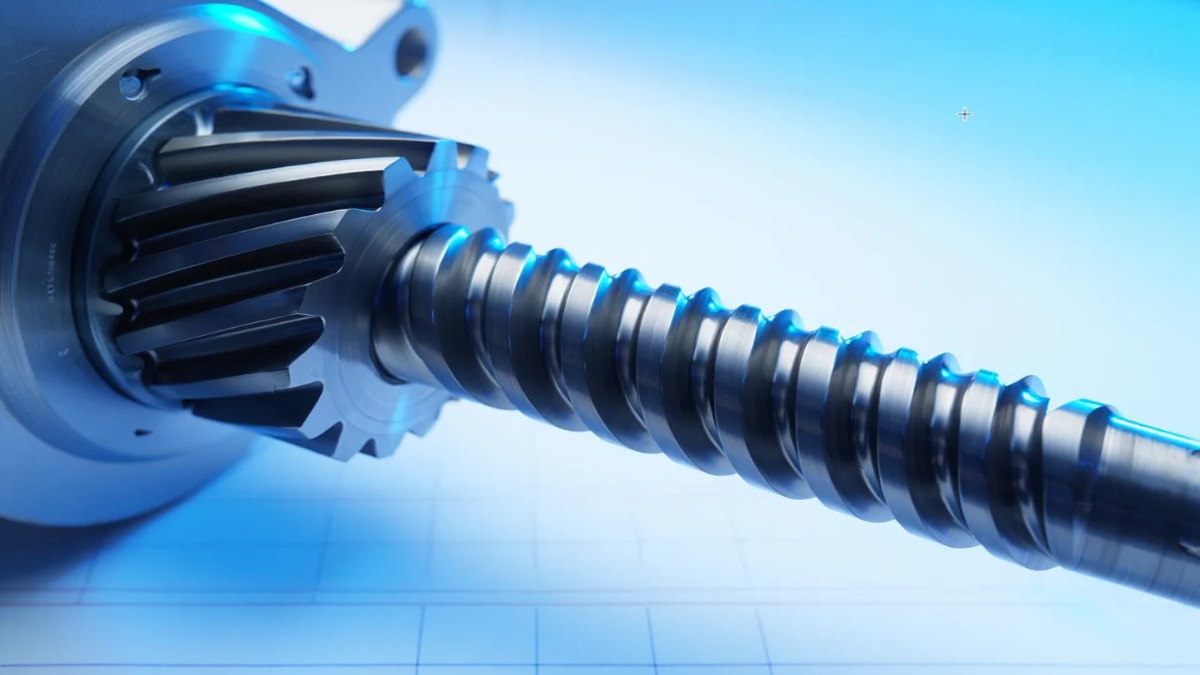
Worm gear systems are widely used in industrial machines because they can deliver high reduction ratios in a compact footprint, often with smooth, quiet operation. In many applications, they are preferred when space is limited and controlled motion is more important than maximum efficiency.
Typical use cases include:
- gear reducers
- lifting and positioning systems
- indexing devices
- conveyors
- compact transmission assemblies
- automation equipment
- stairlift and motion-control mechanisms
Compared with other gear types, Custom Worm Gears are often selected when a machine requires:
- high torque output from a limited installation space
- low-speed controlled motion
- reduced noise and vibration
- a specific non-standard shaft, housing, or ratio configuration
- tailored OEM integration
For standard catalog parts, designers often need to compromise. A custom worm gear solution is valuable when the application has special torque demands, tight packaging constraints, non-standard center distance, material requirements, or unique shaft/wheel geometry.
The 3 Core Inputs: Torque, Speed, and Space
Before discussing materials or machining, buyers should first define the three most important application inputs.
1. Torque Requirement
Torque determines how much load the worm gear must carry. This includes:
- starting torque
- running torque
- peak or shock load torque
- duty cycle over time
A gearbox that runs lightly most of the time but sees occasional spikes will need a different design approach than a continuously loaded reducer.
Why it matters:
If torque is underestimated, the gear may wear too quickly, deform under load, or fail in service. If torque is overestimated too much, the solution may become unnecessarily large and costly.
2. Speed Requirement
Speed affects:
- input RPM
- output RPM
- reduction ratio
- heat generation
- wear pattern
- lubrication behavior
Worm gears are often chosen for speed reduction, but higher input speed can increase friction and temperature. That makes speed one of the most important factors when evaluating long-term reliability.
Why it matters:
A worm gear that performs well at moderate input speed may behave very differently at high RPM, especially under continuous duty.
3. Space Requirement
Space limitations are often what force a project toward Custom Worm Gears. The available envelope may be constrained by:
- machine housing size
- shaft center distance
- mounting direction
- surrounding components
- weight targets
- retrofit limitations
Why it matters:
Even if a gear set meets torque and speed targets, it may still fail as a design choice if it cannot fit inside the available machine layout.
How to Select Custom Worm Gears Step by Step
Step 1: Define the Real Load Case, Not Just the Rated Value
Procurement teams sometimes receive only a simplified spec sheet, but worm gear selection should start from the real operating condition. That means confirming:
- normal working torque
- maximum torque
- input speed range
- operating hours per day
- start-stop frequency
- direction reversals
- shock load or intermittent overload
- ambient temperature
A worm gear used in an indexing table behaves differently from one in a continuously running reducer. The more realistic the load definition, the better the custom design.
Buyer tip
Ask the engineering team for both continuous operating data and peak load data. Many failures come from sizing only for normal conditions while ignoring startup or overload moments.
Step 2: Confirm the Required Reduction Ratio
In worm gear systems, the ratio strongly affects:
- output torque
- output speed
- efficiency
- self-locking behavior
- system compactness
A higher ratio can help reduce speed and increase torque, but it may also reduce efficiency and increase heat generation. In some applications, self-locking is an advantage. In others, it can become a limitation.
Practical question
Do you need:
- smooth reduction only?
- holding ability?
- controlled backdriving?
- fast cycle time?
The answer changes the recommended worm geometry and ratio strategy.
Step 3: Evaluate Available Installation Space Early
Custom projects often begin because a standard part does not fit. Before sending an RFQ, buyers should clarify:
- maximum outer diameter
- available shaft length
- center distance limitations
- mounting orientation
- clearance around bearings or housing
- target weight
This is especially important in compact OEM products, integrated reducers, and customized transmission modules.
Recommended practice
Provide suppliers with:
- 2D drawing or 3D model
- shaft interface requirements
- assembly constraints
- surrounding part interference notes
This shortens development time and reduces redesign risk.
Step 4: Match Material Selection to Duty and Environment
Material choice directly affects:
- wear resistance
- load capacity
- heat performance
- corrosion resistance
- production cost
- lifespan
For example, worm gear and worm wheel materials are often selected as a matched pair rather than as isolated components. Material compatibility influences friction behavior and service durability.
Below is a simplified buyer-oriented view.
Material Considerations Table
| Selection Factor |
Why It Matters |
Buyer Concern |
| Load strength |
Determines resistance to deformation and fatigue |
Will it survive peak torque? |
| Wear resistance |
Affects service life under repeated contact |
How often will parts need replacement? |
| Surface hardness |
Impacts contact durability |
Is heat treatment required? |
| Corrosion resistance |
Important in humid or aggressive environments |
Will the gear operate in harsh conditions? |
| Machinability |
Influences lead time and precision |
Can the supplier produce it consistently? |
| Cost |
Impacts project budget |
Is the design over-specified? |
In practice, the right material decision should be based on load, motion characteristics, environment, and life expectancy, not price alone.
Step 5: Check Efficiency vs. Control Trade-Off
One of the most important truths about worm gear selection is that compactness and high reduction often come with efficiency trade-offs. Buyers should not assume that a worm gear is always the best choice for every transmission problem.
A worm gear may be the right fit when the application values:
- compact reduction
- stable motion
- quiet operation
- controlled output
- possible self-locking behavior
But if the application prioritizes maximum transmission efficiency above all else, other gear types may deserve consideration.
What this means for buyers
Instead of asking, “What is the strongest worm gear?” ask:
“What worm gear configuration best fits my torque, speed, duty cycle, and available space?”
That question leads to better engineering outcomes and more accurate supplier recommendations.
Step 6: Review Manufacturing Precision and Tolerance Control
Even a good design can perform poorly if manufacturing quality is inconsistent. For Custom Worm Gears, buyers should review:
- dimensional tolerance control
- gear accuracy
- tooth geometry consistency
- datum quality
- surface finish
- meshing quality
- inspection capability
These directly affect:
- noise
- backlash
- smoothness
- wear pattern
- temperature rise
- service life
For industrial applications, the supplier’s actual production and inspection capability matters as much as the nominal design.
Key Design Variables That Affect Performance
The following design variables often determine whether a custom worm gear performs well in real-world service.
Gear Ratio
Higher ratio can improve torque output and reduce speed, but often increases friction and heat.
Center Distance
Affects packaging, meshing geometry, and system layout. Small changes can significantly affect integration.
Module and Gear Size
These influence tooth strength, contact behavior, and manufacturability.
Surface Finish
A better surface finish can improve meshing quality and reduce wear, especially in demanding applications.
Heat Treatment
Critical for strength and wear control in many transmission parts, especially under repeated load.
Lubrication Strategy
Often overlooked at purchasing stage, but crucial for lifespan and temperature control.
Duty Cycle
Intermittent, reversing, or continuous operation changes the real design requirement.
A Practical Comparison Table for Buyers
Before finalizing a specification, it helps to compare the three main selection pressures directly.
Custom Worm Gear Selection Priorities
| Priority |
What to Check |
Risk if Ignored |
Practical Action |
| Torque |
Continuous and peak load |
Overload, deformation, early wear |
Confirm real operating load and service factor |
| Speed |
Input/output RPM and duty |
Overheating, poor efficiency, reduced life |
Review thermal behavior and cycle pattern |
| Space |
Diameter, length, center distance |
Assembly conflict, redesign, cost increase |
Share layout drawings early |
| Material |
Strength and wear properties |
Short lifespan, unstable performance |
Match material to load and environment |
| Precision |
Tolerance and meshing quality |
Noise, backlash, poor consistency |
Ask about inspection and QC process |
| Production fit |
Volume, lead time, repeatability |
Delay, unstable quality, high cost |
Confirm prototyping and batch capability |
This framework helps procurement teams ask better questions and avoid making decisions based on unit price alone.
Common Mistakes When Specifying Worm Gears
1. Using only nominal torque values
Many teams ignore startup loads, shock loads, or duty cycle variation.
2. Focusing only on ratio
Ratio matters, but geometry, material, tolerance, and heat also affect success.
3. Waiting too long to discuss space constraints
Late-stage packaging issues often force redesign.
4. Assuming all suppliers have the same custom capability
Not every supplier can support design review, tooling, testing, and stable repeat production.
5. Treating worm gears as standalone parts
In many systems, worm shafts, wheels, bearings, housings, and mating transmission parts must be considered together.
What Procurement Teams Should Ask Suppliers Before Ordering
For B2B buyers, the quality of the RFQ often determines the quality of the result. Before placing an order for Custom Worm Gears, ask suppliers these questions:
Technical Questions
- What torque and speed range is this design intended for?
- How is gear ratio selected for the target application?
- What material options are recommended and why?
- What tolerance or accuracy level can be maintained?
- What inspection methods are used?
Manufacturing Questions
- What machining processes are used?
- Is prototyping available before mass production?
- Can the supplier support tooling adjustments?
- What is the typical lead time?
- Can the supplier handle repeat orders consistently?
Project Questions
- Can the supplier review drawings and suggest design improvements?
- What data should the buyer provide before quotation?
- Can the supplier support OEM / ODM projects?
- How are changes managed during development?
- What are the minimum order and sample conditions?
A capable supplier should be able to answer these clearly, not just provide a price.
FAQ
1. When should a buyer choose Custom Worm Gears instead of standard catalog gears?
Choose custom worm gears when your application has non-standard torque, speed, shaft layout, ratio, or space constraints. They are also useful when OEM products require better integration, lower noise, or tailored geometry that standard catalog parts cannot provide.
2. Are worm gears always suitable for high-torque applications?
Not automatically. Worm gears can deliver strong torque performance in compact systems, but success depends on ratio, material pairing, heat generation, lubrication, and duty cycle. High torque alone is not enough to determine suitability.
3. What information should be included in an RFQ for custom worm gears?
A strong RFQ should include torque, speed, duty cycle, available space, drawings, material preference if known, expected production volume, environment, and any assembly constraints. More complete input usually leads to better supplier recommendations.
4. Why does manufacturing precision matter so much in worm gear performance?
Precision affects meshing smoothness, backlash, noise, heat, and wear. Even a good design can underperform if tooth geometry, datum control, or finishing quality is inconsistent during production.
5. Can custom worm gears help reduce machine size?
Yes, in many cases. One reason buyers choose custom worm gear systems is their ability to provide meaningful reduction in a compact layout. However, the final space benefit depends on the full transmission design, not just the gear set alone.
6. Is lower price a good way to compare custom worm gear suppliers?
Not by itself. A lower quote may hide weaker material choices, limited inspection, less stable tolerances, or poor development support. For industrial use, total lifecycle value matters more than initial piece price.
Final Thoughts
Selecting Custom Worm Gears is not just a matter of choosing a ratio or copying a previous drawing. The right solution must match torque demand, operating speed, duty cycle, installation space, material needs, and manufacturing quality. For procurement teams and OEM decision-makers, the best results usually come from sharing real application data early and working with suppliers that can support both engineering review and production consistency.
For companies sourcing custom worm gears, worm wheels, worm shafts, or related transmission parts, it is also worth looking at manufacturers with experience in OEM/ODM gear development, precision machining, quality inspection, and application-specific customization. For example, Orris Drive Incorporated focuses on custom transmission gears, worm and worm wheel solutions, pinion gears, and worm shafts for industrial applications, with capabilities that align well with projects requiring tailored gear geometry and production support.
If you are evaluating a custom solution and want to review actual product capabilities, you can explore custom worm gears at Orrisdrive. If your team is already preparing drawings, specifications, or sourcing requirements, you can also directly contact Orrisdrive today.