Trend

Pineapple Leaf Fiber Yarn Specifications: A Practical Guide for Textile Buyers

PALF yarn is a natural textile material made from agricultural by-products. This article explains its key properties, including fiber length, strength, moisture behavior, and blending performance. It also outlines practical considerations for textile manufacturing and sourcing, helping buyers evaluate its suitability for different production needs.
Published: Apr 27, 2026
Pineapple Leaf Fiber Yarn Specifications: A Practical Guide for Textile Buyers

Why Textile Manufacturers Are Considering PALF Yarn

Pineapple leaf fiber (PALF) is gaining attention as a raw material in sustainable textiles. It is extracted from the leaves of Ananas comosus, which are usually discarded after harvest. By turning agricultural waste into fiber, PALF fits well with current sourcing trends focused on sustainability and resource efficiency.

For textile mills and sourcing teams, the key issue is not the concept of sustainability. The real concern is whether the material can meet production requirements. That depends on understanding the yarn specifications and how they affect manufacturing.

Compared with common fibers such as cotton and polyester, PALF offers several practical advantages.

  • It comes from agricultural by-products
  • It is biodegradable
  • It has relatively high tensile strength
  • It is lightweight and breathable

These properties make it suitable for applications such as woven fabrics, blended yarns, and environmentally focused product lines.

Key Pineapple Leaf Fiber Yarn Specifications

Fiber Length

PALF is generally considered a long fiber, but the actual length depends on the extraction process. Longer fibers are easier to spin and usually result in stronger yarn. Buyers should check the average fiber length and whether the supply is consistent across batches.

Linear Density

Linear density is typically expressed in denier or tex. PALF is usually coarser than cotton, although processing methods can improve fineness. This factor influences how the yarn feels and where it can be used. Finer yarns are more suitable for apparel, while coarser yarns may be used in home textiles or accessories.

Tensile Strength

One of the main strengths of PALF is its tensile performance. It is stronger than many natural fibers, which makes it useful in blends where additional strength is needed. This is particularly relevant for fabrics that require durability.

Moisture Regain

PALF has moderate moisture absorption. It performs better than synthetic fibers in terms of breathability, but not as high as some natural fibers. This affects both comfort and dyeing behavior.

Color and Appearance

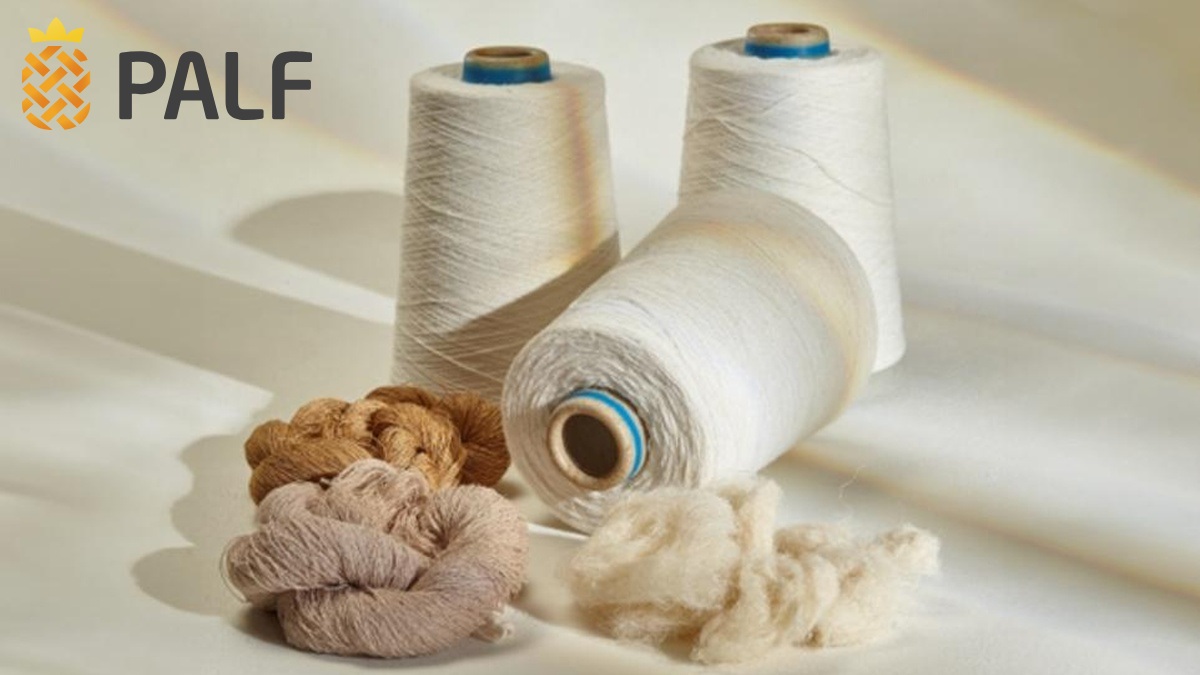
The natural color ranges from off-white to light beige. Additional processing may be required depending on the final product requirements.

Blending Options in Commercial Use

In most cases, PALF is not used alone. It is blended with other fibers to improve processability and balance performance.

Common combinations include:

  • PALF with cotton for better softness
  • PALF with polyester for improved durability
  • PALF with recycled fibers for sustainability positioning

Blending is often necessary to make the material practical for large-scale production.

Manufacturing Considerations for Mills

Before introducing PALF yarn into production, several factors should be reviewed.

  • Spinning: Fiber consistency can affect spinning performance. Some adjustment may be required depending on the equipment.
  • Dyeing: Natural fibers do not always absorb dye evenly. Pre-treatment or testing is recommended.
  • Fabric Type: PALF is more commonly used in woven fabrics. Knit applications are possible but usually require blending. Nonwoven uses are also being developed.

Sourcing Considerations for Textile Buyers

When sourcing PALF yarn, buyers should focus on the following:

  • Fiber consistency and grading
  • Supplier processing capability
  • Stability of supply
  • Flexibility in customization

Working with a supplier that understands textile applications can reduce development time and improve product outcomes.

Supplier Insight

Ecopalf focuses on pineapple leaf fiber yarn and textile-oriented materials. Its development is centered on fiber processing and yarn applications rather than industrial composites.

This positioning is relevant for brands and mills that are working on sustainable textiles and need materials that can be integrated into existing production systems.

Conclusion

Pineapple leaf fiber has moved beyond concept-level discussion and is entering practical use in textile manufacturing. For buyers, the main task is to evaluate whether the material fits their production requirements.

This requires a clear understanding of yarn specifications, blending strategies, and supplier capabilities.

Looking for Pineapple Leaf Fiber Yarn Supply

If you are working on sustainable textile development, it is important to work with a supplier that can provide stable material quality and support product development.

Ecopalf provides pineapple leaf fiber yarn and related materials for textile applications, with a focus on practical use rather than concept promotion.

Published by Apr 27, 2026

Industry Sources

Ecopalf - Pineapple Leaf Fiber Overview
Ecopalf - Pineapple Leaf Fiber Manufacturing Process

Technical References

ScienceDirect - Pineapple Leaf Fiber
Springer - Pineapple Leaf Fiber Research

Standards and Industry Organizations

The Textile Institute
ASTM International
Textile Exchange

Further reading

You might also be interested in ...

Headline
Trend
Commercial Vehicle Growth Is Lifting DOT Air Fitting Demand
Market Outlook, Procurement Priorities, and Supplier Evaluation for DOT Air Fittings in Commercial Vehicles
Headline
Trend
Robotic Coffee Arms in F&B Retail Why Automated Beverage Service Is Expanding
How robotic coffee arms are entering F&B retail as a practical format for consistency, uptime, and space efficiency
Headline
Trend
Drinking Water Treatment Trends in 2026: Why PFAS, Microplastics, and Smarter Purification Standards Are Reshaping the Market
As PFAS regulation tightens and microplastics concerns grow, the global drinking water treatment market is shifting toward higher purification standards and more performance-focused systems.
Headline
Trend
Why Beverage Powder Brands Are Looking Beyond Price When Choosing Manufacturing Partners
In a more volatile market, beverage powder brands are rethinking how they evaluate suppliers. Price still matters, but more companies are prioritizing stability, development support, and long-term manufacturing alignment.
Headline
Trend
How Rising Material Costs Are Changing Tracheostomy Tube Sourcing Trends
Rising costs are changing more than pricing expectations. They are also reshaping how the market evaluates supply continuity, product breadth, and long-term sourcing stability.
Headline
Trend
How Drawer Slides Improve Ergonomics and Safety in Workstations
More than a hardware component, drawer slides are a key factor in creating workstations that are ergonomic, reliable, and safe to use.
Headline
Trend
From Black Box to Data Hub: A Systems Perspective on Smart Tool Management
Smart Tool Management: From Passive Assets to an Intelligent Data Ecosystem
Headline
Trend
RO Technology as a Core Solution for Water Quality Challenges in Asian Manufacturing
Asian manufacturing is becoming increasingly dependent on consistent water quality. From electronics fabrication to textile finishing and metal processing, water interacts with nearly every part of the production chain. Yet many facilities across Taiwan, Vietnam, Malaysia, and mainland China continue to face fluctuating water conditions that compromise operational stability. As water hardness, TDS, silica, and seasonal turbidity shifts become more pronounced, reverse osmosis (RO) technology is emerging as a foundational tool for controlling process-water reliability.
Headline
Trend
How ESG Is Reshaping Global Medical Manufacturing: Why Sustainable Materials Are Becoming an OEM/ODM Standard
The global push toward sustainability is transforming the medical manufacturing ecosystem. Medical OEM/ODM companies, healthcare brands, and hospital systems are increasingly incorporating ESG—Environmental, Social, and Governance—criteria into supplier selection and long-term sourcing strategies. In sectors where medical-grade plastic components and precision molding play a critical role, material sustainability, recyclability, and process transparency have quickly emerged as strategic decision factors.
Headline
Trend
Procurement Guide: Choosing Scaffolding Systems That Meet International Standards
Scaffolding plays a critical role in structural access, construction workflows, and worker safety. Procurement teams increasingly rely on international standards such as EN74, BS1139, and OSHA 1926 when selecting vendors and evaluating system quality. This article provides a practical, neutral overview of how buyers can assess compliance and compares several notable ring lock scaffolding suppliers serving global markets.
Headline
Trend
How Food Certifications and Halal Standards Drive the Global Bubble Tea Ingredients Market
The global demand for bubble tea is driving stricter requirements for ingredient sourcing, making food certifications and Halal standards essential for market access. Suppliers of tapioca pearls, flavored syrups, and toppings must comply with recognized food-safety frameworks like ISO 22000 and FSSC 22000, while Halal certification ensures products meet Islamic dietary laws for Muslim-majority markets. Together, these certifications not only safeguard quality and safety but also enable manufacturers, café owners, and distributors to expand their reach with confidence when sourcing OEM/ODM bubble tea ingredients and other bubble tea supplies.
Headline
Trend
Ensuring Safety and Efficiency in Can-Making Equipment for High-Corrosion, High-Pressure Applications
As the event and stage engineering industry faces increasing demands for speed, safety, and sustainability, temporary structures must evolve beyond traditional construction methods. Modular scaffolding has become a core infrastructure solution, redefining how large-scale events are built, managed, and optimized.
Agree