Published for industrial and semiconductor supply chain audiences
Semiconductor manufacturing is often associated with advanced technologies such as lithography, deposition, etching, and inspection. While these processes are central to chip production, another layer of manufacturing capability works quietly behind the scenes: precision machining. Machine tools do not directly fabricate integrated circuits, but they play a foundational role in producing the critical components, structures, fixtures, and precision elements that semiconductor equipment depends on. This is where Victor Taichung’s machining centers and CNC lathes deliver real value.
Why Semiconductor Manufacturing Depends on Precision Beyond the Wafer
Modern semiconductor manufacturing is one of the most demanding production environments in the world. A single chip may go through hundreds of process steps over several months, with repeated cycles of deposition, lithography, etching, cleaning, measurement, and packaging. Across these steps, success depends not only on process technology but also on the stability and accuracy of the equipment involved.
That equipment is built from a wide range of critical parts, including chambers, lids, brackets, clamps, fittings, connectors, slides, guide rails, and many other precision components. Each part must meet strict dimensional, geometric, and surface quality requirements. Even minor deviations can affect alignment, sealing, motion stability, contamination control, and overall process reliability.
This is why machine tools matter in semiconductor manufacturing. They provide the manufacturing foundation needed to produce the parts that allow semiconductor equipment to operate accurately and consistently.
The True Role of Machine Tools in the Semiconductor Industry
It is important to define the role of machine tools correctly. Machine tools are not substitutes for semiconductor process equipment, nor are they used to directly fabricate integrated circuits. Their value lies in supporting the broader semiconductor ecosystem.
In practice, machine tools are used to manufacture:
- Structural components for semiconductor equipment
- Precision mechanical parts used in wafer handling systems
- Fixtures and jigs for wafer cutting, packaging, and testing
- Motion-related parts such as slides and guide rails
- Connectors, fittings, and supporting hardware for subsystem integration
- High-precision parts required by semiconductor equipment suppliers and subcontractors
This means machine tools serve as a backbone technology for semiconductor equipment manufacturers, component suppliers, and precision engineering partners throughout the supply chain.
What Makes Semiconductor-Related Component Machining So Demanding
Machining for semiconductor applications is not simply about removing material quickly. The real challenge is maintaining quality and repeatability while producing parts used in highly controlled environments.
Tight tolerances and repeatability
Many semiconductor equipment parts require precise dimensional control and consistent repeatability. Components often need to fit into complex assemblies where alignment, sealing, and motion performance are critical. If tolerances vary, the resulting instability can affect equipment uptime and process consistency.
Complex geometries and multi-face machining
Parts such as chambers, brackets, and support structures may involve intricate geometries, multiple surfaces, and difficult-to-access features. Efficient production of these components requires machine tools capable of handling complex machining tasks while maintaining precision across multiple operations.
Surface quality and assembly performance
Surface condition can directly influence the functionality of a component. Burrs, tool marks, or inconsistent finishing may affect fit, wear behavior, contamination risk, or downstream treatments. High-quality machining helps create parts that are ready for reliable integration into semiconductor systems.
Productivity in high-value manufacturing
Semiconductor-related parts are typically high-value components. Manufacturers need machine tools that deliver not only precision but also speed and efficiency. Shorter lead times, stable cycle performance, and dependable throughput all matter when supporting semiconductor equipment production schedules.
How Victor Taichung Supports the Semiconductor Industry
Victor Taichung’s semiconductor application positioning aligns closely with these industry realities. According to its official semiconductor application information, Victor Taichung highlights three key strengths for semiconductor-related machining:
- High precision
- High speed
- High efficiency
These are exactly the qualities required to support semiconductor equipment component manufacturing.
Victor Taichung also indicates that its machine tools can be applied to micro-processing in semiconductor manufacturing processes. This matters because it positions the company not as a direct chip producer, but as a precision machining partner supporting the semiconductor manufacturing ecosystem.
In addition, Victor Taichung identifies applications in wafer cutting, packaging, and testing, areas where precision mechanical components, fixtures, and stable support structures are especially important.
Critical Semiconductor Components Victor Taichung Machines Can Support
One of the strongest aspects of Victor Taichung’s semiconductor positioning is that it points to specific component types. The official semiconductor application page mentions parts such as chambers, lids, brackets, clamps, fittings, connectors, slides, and guide rails.
This list provides a practical view of how machine tools support semiconductor manufacturing at the component level.
Chambers and lids
Chambers and lids are essential structural elements in many semiconductor systems. These parts require dimensional stability, accurate mating surfaces, and reliable machining quality. Precision machining is necessary to support sealing, assembly accuracy, and long-term operational stability.
Brackets and clamps
Brackets and clamps help secure, align, and support parts within equipment assemblies. Their role may appear simple, but in high-precision systems, dimensional accuracy and consistency are critical to mechanical reliability and repeatable performance.
Fittings and connectors
Fittings and connectors are essential to subsystem integration. These components may be compact, but they require high machining accuracy and dependable quality to support assembly integrity and operational stability.
Slides and guide rails
Slides and guide rails are directly related to motion, positioning, and mechanical guidance. In semiconductor-related equipment, stable movement and repeatable positioning are essential, making machining quality in these parts especially important.
Why Machining Centers and CNC Lathes Both Matter
Victor Taichung’s core strengths in machining centers and CNC lathes are highly relevant to semiconductor component manufacturing because different part categories require different machining approaches.
Machining centers for complex structural parts
Machining centers are well suited for parts with multiple faces, contoured surfaces, and integrated features. They are especially valuable for machining chambers, lids, brackets, clamps, slides, and guide rail structures. These parts often involve multiple operations and demand precise control across different machining surfaces.
CNC lathes for rotational and connection-related components
CNC lathes are ideal for rotationally symmetric and connection-oriented components such as fittings, connectors, sleeves, flanges, shafts, and other precision round parts. In semiconductor equipment supply chains, these components are frequently required in high precision and with reliable repeatability.
Together, machining centers and CNC lathes create a more complete manufacturing capability for semiconductor-related parts production.
Supporting Wafer Cutting, Packaging, and Testing
Victor Taichung’s official semiconductor application information also points to wafer cutting, packaging, and testing. These adjacent areas of semiconductor production rely heavily on precision mechanics, stable part geometry, and efficient component manufacturing.
In these applications, machine tools can support the production of:
- Precision fixtures
- Mounting structures
- Handling parts
- Alignment-related components
- Support frames
- Small precision mechanical parts used in packaging and test systems
As semiconductor packaging technologies become more advanced and quality demands continue to rise, the need for accurate and efficient machining support becomes even greater.
The Significance of the Vcenter-AX380
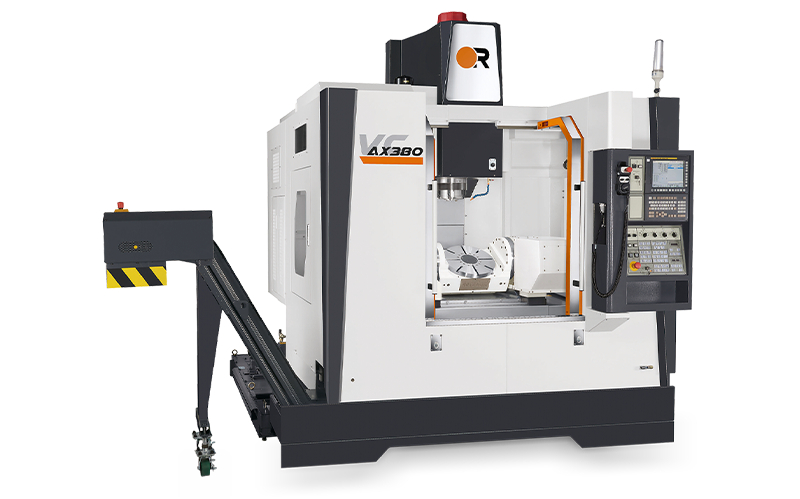
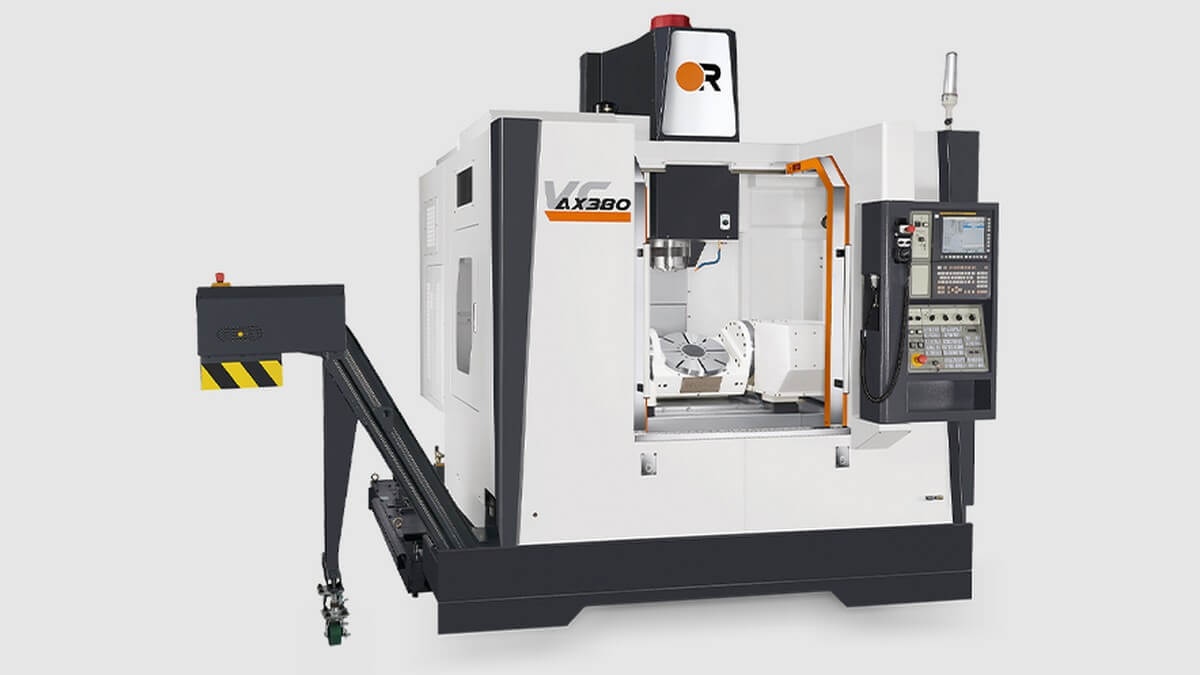
Victor Taichung identifies the Vcenter-AX380 Fixed Column C-framed 5-Axis VMC as an applicable model for semiconductor applications. This is meaningful because it points to a concrete machine platform aligned with the needs of precision semiconductor-related component machining.
For suppliers serving the semiconductor industry, this type of machine capability can help reduce variation, improve machining consistency, and support demanding delivery schedules. It also reinforces Victor Taichung’s positioning as a provider of practical, production-oriented machining solutions for high-value industrial sectors.
Precision Machining as a Strategic Enabler for Semiconductor Growth
As the semiconductor industry continues to expand, much of the attention goes to front-end fabrication technology and advanced packaging innovation. Yet none of this can scale without the mechanical systems, equipment structures, and precision components that support the production environment.
This is where machine tools create value. They enable the production of critical parts that keep semiconductor manufacturing equipment accurate, stable, and productive. Their contribution may be less visible than lithography or etching systems, but it is no less important.
Victor Taichung’s value in this field lies in its ability to provide machining solutions built around high precision, high speed, and high efficiency. By supporting the machining of key semiconductor-related components and applications such as wafer cutting, packaging, and testing, Victor Taichung helps strengthen the manufacturing foundation behind the semiconductor industry.
Conclusion
Machine tools are an essential but often overlooked part of the semiconductor ecosystem. They do not fabricate chips directly, but they make possible the components, structures, and precision parts that semiconductor equipment depends on.
This makes machining capability a crucial part of semiconductor supply chain readiness.
With its machining centers and CNC lathes, Victor Taichung is positioned to support this demand through precision-driven component manufacturing. From chambers and brackets to fittings, connectors, slides, and guide rails, its machines help enable the precision, efficiency, and reliability that semiconductor-related applications require.
In an industry where every micron, every cycle, and every component matters, the value of the right machine tool is clear: it helps build the foundation on which semiconductor manufacturing performs.