More than a hardware component, drawer slides are a key factor in creating workstations that are ergonomic, reliable, and safe to use.
In professional workstations, poor access design quietly reduces productivity, increases operator fatigue, and creates avoidable safety risks. When drawers are hard to pull, difficult to see into, or unstable under load, users lose time through repeated reaching, awkward movement, and unnecessary adjustments. Drawer slides are no longer a minor hardware detail. They directly influence usability, reliability, safety, and the overall performance of the workstation.
Why Access Design Is Now a Productivity Issue
In many industrial, medical, and commercial settings, the real cost of poor access design is not limited to inconvenience. It appears in slower workflows, repeated movement, blocked visibility, and inefficient retrieval of tools or stored items. A workstation may seem well organized, but if access is difficult or inconsistent, routine tasks take longer and place more strain on daily operations.
This becomes more noticeable in environments where drawers are opened and closed repeatedly throughout the day. In these cases, access design affects:
- task speed
- organization efficiency
- user comfort
- consistency of operation
- maintenance flow
As workstations become more compact, mobile, and function-specific, access hardware has become part of productivity design rather than just a structural component.
How Drawer Slides Affect Reach, Visibility, and User Fatigue
Ergonomic performance is closely shaped by extension length, motion smoothness, and drawer stability. When a drawer does not extend far enough, stored items near the back become harder to reach and easier to overlook. This often leads to deeper reaching, awkward wrist angles, and unnecessary upper-body movement.
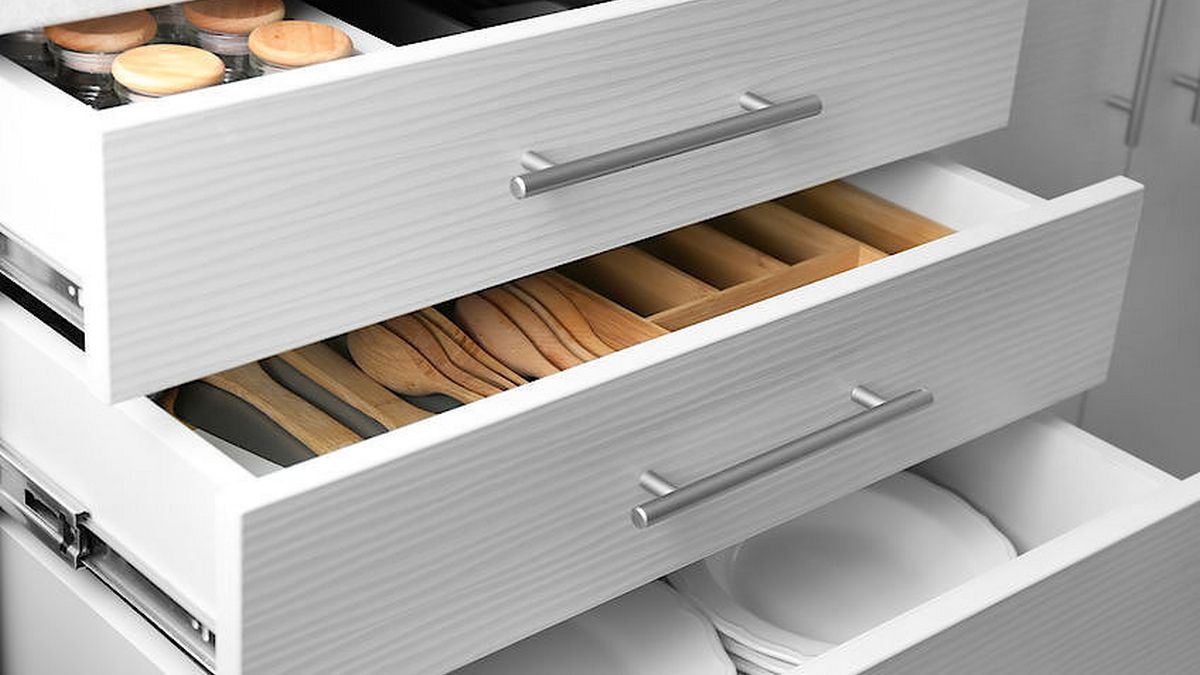
Full-extension drawer slides help improve visibility and allow contents to be accessed more directly. Smooth ball bearing movement also reduces the effort required to open loaded drawers. When motion is rough or inconsistent, users tend to apply more force, which increases fatigue over time. In high-frequency work areas, even small inefficiencies become more serious when repeated across an entire shift.
Good access design reduces unnecessary motion and supports a more natural workflow. It helps users find what they need faster, retrieve items more comfortably, and return drawers with greater control.
The Link Between Motion Quality and Workplace Safety
Motion quality has a direct effect on workplace safety. A drawer that sticks, slams shut, shifts during travel, or opens unevenly can interrupt workflow and create unnecessary risk. In mobile workstations or high-load environments, unstable movement may also affect balance and handling.
These safety issues often appear in very practical ways:
- fingers caught by sudden closure
- uncontrolled extension under load
- drawer instability during movement
- spills or disorganized contents
- excess force applied during opening
For that reason, ergonomics and safety should be treated as part of the same design decision. Better motion control supports both. Features such as soft-closing systems, interlock mechanisms, and lock-in or lock-out functions help reduce unintended movement and create a more stable user experience.
Where Ergonomic Slide Design Creates the Most Value
Ergonomic slide design delivers the greatest value in environments where speed, repeatability, and secure access matter every day.
Mobile Tool Carts
Tool carts are often moved across different work areas while carrying dense, heavy contents. Drawer slides in these systems need to maintain stable movement and dependable support, especially when drawers are opened frequently throughout the day.
Maintenance Stations
Maintenance work depends on efficient access to tools, spare parts, and service components. Drawers that open fully and move smoothly help reduce wasted motion and support faster routine tasks.
Medical Workstations
Medical environments require quick, accurate access to supplies in limited spaces. Controlled motion and reliable drawer behavior help support cleaner workflows, quieter operation, and safer handling.
Commercial Storage Systems
In commercial storage settings, access efficiency affects both organization and daily labor performance. A better slide system helps reduce handling time, improves visibility, and supports more consistent use.
Features That Improve Safety and Ease of Use
The most suitable slide system depends on the application, but several features consistently improve daily performance.
- Full extension improves visibility and allows easier retrieval
- Soft-closing function supports quieter and more controlled movement
- Interlock systems improve safety in multi-drawer units
- Lock-in/lock-out capability adds stability in mobile or vibration-prone settings
- Appropriate load capacity supports reliable performance under actual working conditions
The real goal is not to add more features for appearance. It is to choose a slide design that reduces strain, improves access, and supports stable use over time.
Designing Workstations Around Real User Behavior
Effective workstation design starts with how the unit is actually used. Drawer frequency, load distribution, movement patterns, visibility needs, and surrounding conditions all influence which slide system will perform well over time.
A more practical evaluation usually includes:
- how often drawers are opened and closed
- what type of items are stored
- whether the workstation remains stationary or moves frequently
- how much visibility is needed during access
- what kind of motion control is required
- what risks may appear in daily use
When these factors are considered early, access design becomes a functional advantage rather than a hidden source of friction.
Tai Cheer, a Taiwan-based manufacturer with decades of experience in ball bearing drawer slides, offers a wide product range covering light-duty, medium-duty, and heavy-duty applications. Its portfolio also includes full-extension models, soft-closing systems, and interlock functions. With four manufacturing plants in central Taiwan, about 100 production lines, and certifications including IATF 16949, ISO 9001, and ISO 14001, Tai Cheer supports OEM, ODM, and custom-specification projects for applications that require dependable movement, durability, and consistent quality.
Better Access Design Creates Better Workstations
In professional workstations, drawer slides influence far more than basic opening and closing. They affect visibility, reach, physical effort, motion stability, and everyday safety. As work environments continue to demand higher efficiency and better usability, access design is becoming a more important part of overall workstation performance. Choosing the right slide system helps create workstations that are easier to use, safer to operate, and more reliable over the long term.




(3796)(20260924)(原).jpg)
(4005)(20260924)(原).jpg)