Introduction to the Development Uses and Functions of CNC Lathes
Knowledge

Introduction to the Development Uses and Functions of CNC Lathes

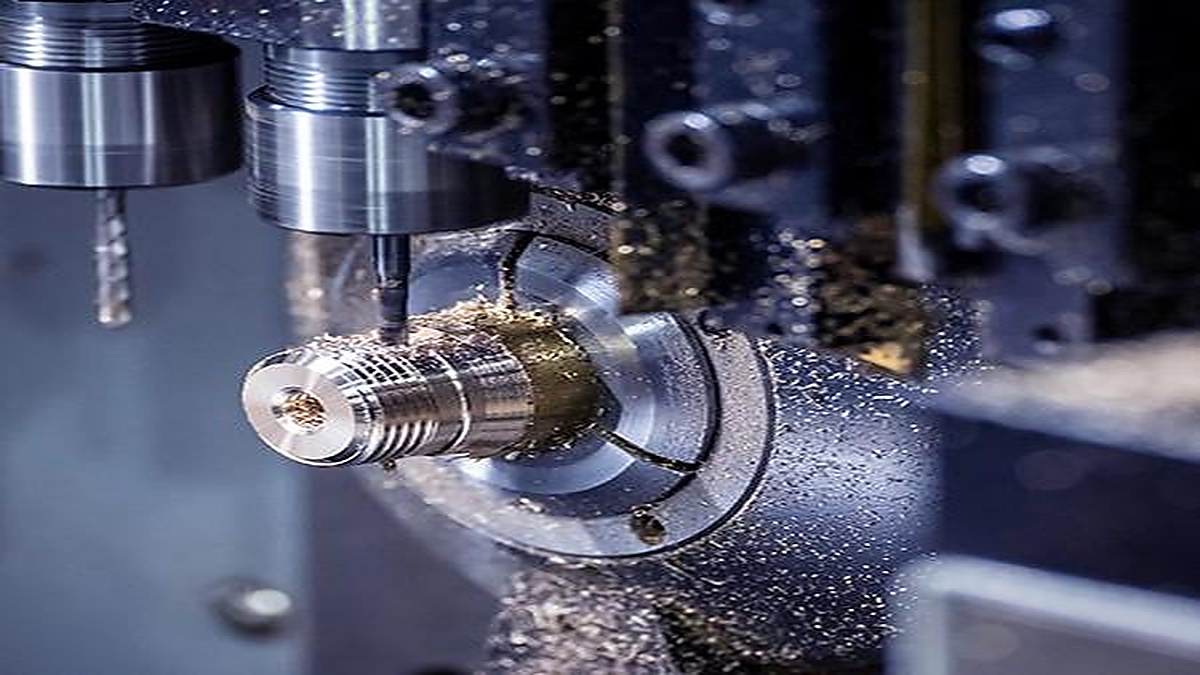
Lathes are machine tools that use turning tools to turn rotating workpieces. On the lathe, drills, reamers, reamers, taps, die and knurling tools can also be used for corresponding processing. Lathes are mainly used for processing shafts, disks, sleeves and other workpieces with rotating surfaces. They are the most widely used machine tools in machinery manufacturing and repair plants.
Published: May 12, 2020
Introduction to the Development Uses and Functions of CNC Lathes

The use of lathe technology

The development uses and functions of lathes. Lathes are machine tools that use turning tools to turn rotating workpieces. On the lathe, drills, reamers, reamers, taps, die and knurling tools can also be used for corresponding processing. Lathes are mainly used for processing shafts, discs, sleeves, and other workpieces with rotating surfaces. They are the most widely used machine tools in machinery manufacturing and repair plants. In ancient times, lathes were cut by hand or foot, rotating the workpiece through a rope, and holding a tool.

In 1797, the British mechanical inventor Mozley created a modern lathe with a screw drive tool holder

In 1800, the exchange gear was used to change the feed speed and the pitch of the processed thread. In 1817, another Englishman, Roberts, used a four-stage pulley and back wheel mechanism to change the spindle speed. To improve the degree of mechanization and automation, Fitch of the United States invented the turret lathe in 1845

In 1848, the United States appeared a revolver lathe; in 1873, the United States Spencer made a single-axis automatic lathe, and soon he made Three-axis automatic lathes; lathes with gearboxes driven by individual motors appeared in the early 20th century. After the First World War, due to the needs of the arms, automobile, and other machinery industries, various efficient automatic lathes, and specialized lathes developed rapidly. To increase the productivity of small batches of workpieces, in the late 1940s, lathes with hydraulic profiling devices were popularized, and at the same time, multi-tool lathes were also developed.

In the mid-1950s, program-controlled lathes with punched cards, latch plates, and dials were developed.

CNC technology began to be used in lathes in the 1960s and has developed rapidly since the 1970s. Lathes are divided into various types according to their uses and functions. Ordinary lathes have a wide range of processing objects, a large adjustment range of spindle speed and feed rate, and can process the inner and outer surfaces, end surfaces, and internal and external threads of the workpiece. This kind of lathe is mainly operated by workers manually, and the production efficiency is low. It is suitable for single parts, small batch production, and repair workshops. The turret lathe and rotary lathe have a turret tool holder or a revolver tool holder that can hold multiple tools. The workers can use a variety of tools to complete multiple processes in a single clamping of the workpiece, which is suitable for batch production. The automatic lathe can automatically complete the multi-process processing of small and medium-sized workpieces according to a certain program. It can automatically load and unload and repeatedly process a batch of the same workpieces. It is suitable for large-scale and mass production. Multi-blade semi-automatic lathes are divided into single-axis, multi-axis, horizontal and vertical. The layout of the single-axis horizontal type is similar to that of ordinary lathes, but the two sets of tool holders are installed in front, back, or up and down of the main shaft, and are used to process disks, rings, and shafts. Their productivity is 3 to 5 times higher than that of ordinary lathes. The copying lathe can automatically complete the processing loop of the workpiece according to the shape and size of the template or sample. It is suitable for the small-batch and batch production of more complicated workpieces. The productivity is 10 to 15 times higher than that of the ordinary lathe. There are multi-tool holder, multi-axis, chuck, vertical and other types. The main axis of the vertical lathe is perpendicular to the horizontal plane, the workpiece is clamped on a horizontal rotary table, and the tool holder moves on the beam or column. It is suitable for processing larger, heavier workpieces that are difficult to install on ordinary lathes, generally divided into two categories: single column and double column. While the shovel-tooth lathe is turning, the tool holder periodically reciprocates in a radial direction, which is used to form the tooth surface of the forklift milling cutter, hob, etc. Usually with a shovel attachment, a small grinding wheel driven by a separate motor shovel the tooth surface. Special lathes are lathes used to process specific surfaces of certain types of workpieces, such as crankshaft lathes, camshaft lathes, wheel lathes, axle lathes, roll lathes, and steel ingot lathes. The combined lathe is mainly used for turning, but after adding some special parts and accessories, it can also be processed by boring, milling, drilling, inserting, grinding, etc. It has the characteristics of "one machine with multiple functions" and is suitable for engineering vehicles, ships, or mobile Repair work at the repair station.

CNC machining technology

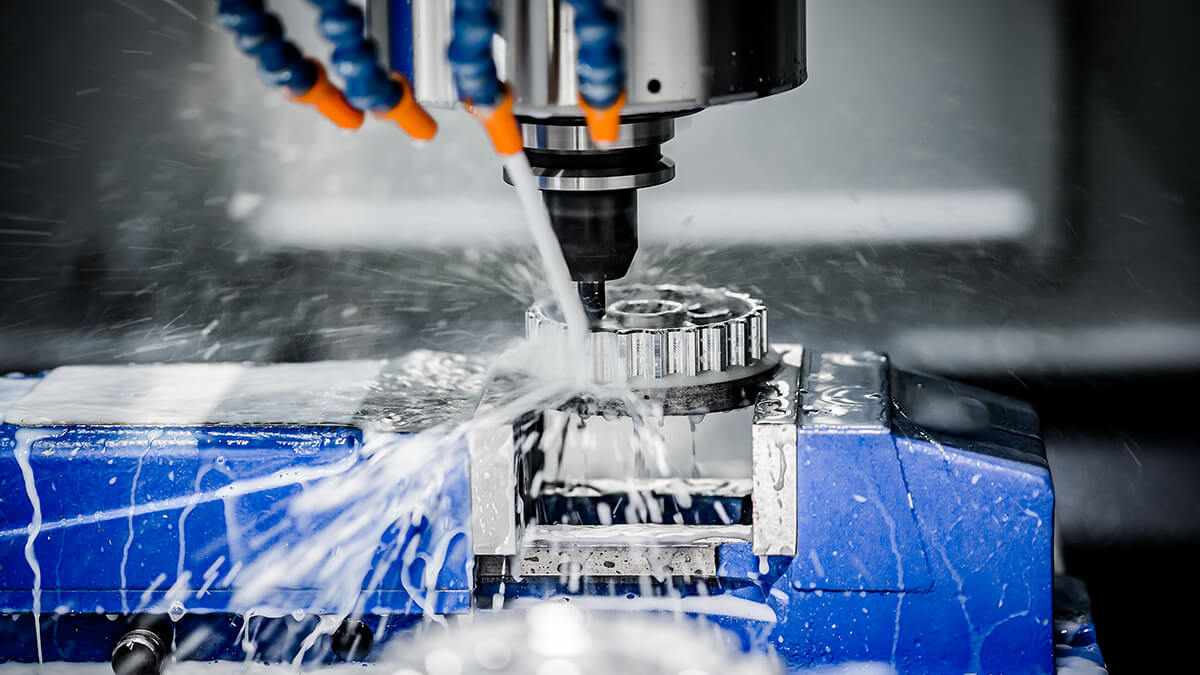
The machining principle of CNC milling machine is the same as that of CNC lathe. CNC milling machine also drives the milling machine through digital signals. The milling machine uses the workpiece for XY plane movement. The Z axis is the tool spindle rotation. The working machine for moving working objects for cutting is a very economical way for a few or mass production.


Published by May 12, 2020 Source :th-s

Further reading

You might also be interested in ...

Headline
Knowledge
How 5-Axis Tapping Centers Help Reduce Setup Time, Improve Accuracy and Support Flexible Production
Why flexibility, not volume, is becoming the real competitive advantage for automotive, motorcycle and bicycle parts manufacturers.
Headline
Knowledge
Automatic Packaging Line vs. Standalone Packaging Machines: Which Is Better for Your Factory?
A practical guide to choosing the right packaging equipment strategy for your production volume, product mix, and automation goals.
Headline
Knowledge
How to Evaluate Cutting Pliers Quality Before Bulk Purchasing: Common Issues Buyers Should Watch For
A practical quality checklist for importers, wholesalers and industrial buyers reviewing cutting pliers before large orders.
Headline
Knowledge
How to Choose a Shrink Bundler Machine for Bottles, Cans and Tetra Pak Products
A practical guide to selecting shrink bundling equipment for beverage, food and carton packaging lines.
Headline
Knowledge
PEEK Plastic Applications and Benefits: Where High-Performance Engineering Plastics Add the Most Value
PEEK is a high-performance engineering plastic used in demanding industries that need heat resistance, chemical resistance, and dimensional stability. This article explains where PEEK adds the most value, how it is used in medical, semiconductor, aerospace, and industrial applications, and what engineers should consider before CNC machining and production scale-up.
Headline
Knowledge
Beyond Part Holding: The Role of TCP Thin Carrier Plate in Advanced Automated Manufacturing
As manufacturing environments become more compact, more precise, and more automated, components that were once treated as secondary are gaining much greater technical importance. Among them, the tcp thin carrier plate has become increasingly relevant in high-density production, especially in processes involving precision transfer, terminal handling, dipping-related applications, and repeated automated movement. For procurement teams, process engineers, and equipment integrators, the decision is no longer just about whether a carrier plate can physically hold a part. The more important question is whether it can maintain stable performance under real production conditions. In high-density manufacturing, even a small variation in flatness, thickness consistency, rigidity, or thermal behavior may lead to process instability, lower yield, or increased equipment interruption. This is why the tcp thin carrier plate is now being assessed more carefully as a process-critical component rather than a simple fixture.
Headline
Knowledge
Biodegradable Straw Making Machines: Key Technologies Driving Sustainable Packaging Production
This article examines how biodegradable straw making machines are supporting the shift toward sustainable packaging production. It covers PLA and paper straw manufacturing technologies, automation trends, production challenges, and key factors manufacturers should consider when selecting biodegradable straw production equipment.
Headline
Knowledge
Choosing Between C-Frame and H-Frame Hydraulic Presses for Metal Stamping
This article provides a comprehensive guide for manufacturers on choosing between C-frame and H-frame hydraulic presses for metal stamping operations. It begins by analyzing the structural differences: C-frame presses are highlighted for their three-sided accessibility and space-saving design, making them ideal for light to medium-duty tasks. In contrast, H-frame presses are recognized for their superior stability and rigidity, making them the preferred choice for high-tonnage, high-precision, and heavy-duty applications. The article features a detailed comparative table evaluating both types based on tonnage capacity, footprint, and cost. It also outlines critical selection factors such as precision requirements and budget constraints. Finally, the guide naturally introduces leading global manufacturers, including Yeh Chiun, Schuler, AIDA, Komatsu, and Beckwood, helping readers make informed investment decisions tailored to their specific production needs.
Headline
Knowledge
What Do Fruit Juice Suppliers Provide? A Practical Guide for Beverage and Food Brands
A practical overview of ingredient formats, supplier services, and sourcing considerations for beverage and food product development.
Headline
Knowledge
Understanding HVLP Technology: How Low Pressure High Volume Saves Paint and Costs
A practical guide to how HVLP spray systems improve coating efficiency, reduce waste, and support better cost control.
Headline
Knowledge
Why Skin and Immune Formulation Matters More Than Coat Appearance in Companion Animal Health
Skin and coat concerns in companion animals often signal a broader formulation challenge rather than a surface-level issue alone. Recurrent dryness, itching, dull coat condition, and visible sensitivity are frequently linked to barrier weakness, immune imbalance, nutrient utilization, and digestive stability. Products positioned only around coat shine or a single trending ingredient may therefore fall short in daily use. More effective formulation usually begins with a broader biological view: skin health is closely shaped by the interaction between barrier function, immune response, microbiota balance, and life-stage needs.
Headline
Knowledge
Why Food Safety Certifications Matter More Than Ever in Bubble Tea Supply Chains
Bubble tea supply chains are under greater scrutiny than before. Flavor innovation still drives demand, but in cross-border trade, growth increasingly depends on whether ingredients can move through approval processes smoothly, meet market-specific expectations, and remain consistent across repeated shipments. Certifications such as ISO 22000, HACCP, FSSC 22000, HALAL, and KOSHER are no longer just supporting documents. They now influence market access, supplier credibility, risk control, and the ability to maintain stable commercial relationships over time.
Agree