Choosing between die casting and forging for aluminum parts can affect far more than production cost alone.
The wrong process may lead to unnecessary machining, longer lead times, avoidable design limitations, or performance issues in actual use. Although both processes are widely used in aluminum part manufacturing, they are not interchangeable. Each supports a different balance of strength, geometry, efficiency, and cost. The key is not deciding which process is better in general, but determining which one is better suited to the part’s actual function and production requirements.
Why These Two Processes Are Often Compared
Die casting and forging are often compared because both are established methods for producing aluminum parts across a wide range of industrial applications. At an early development stage, the two may appear to serve the same purpose: both can produce repeatable metal parts at scale, and both can support demanding product programs.
However, the comparison becomes more important when a part must meet several goals at once, such as structural performance, dimensional consistency, surface quality, and cost control. In many projects, uncertainty begins when the part seems to require both strength and complexity. That is usually the point where a closer evaluation of process fit becomes necessary.
How Die Casting and Forging Differ in Principle
Die casting produces parts by injecting molten aluminum into a steel mold under high pressure. This process is commonly used when a part requires thin walls, detailed features, smooth surfaces, or consistent dimensions over large production runs. It is especially effective when multiple design features need to be integrated into a single part.
Forging shapes solid aluminum through compressive force, often with heat applied to improve formability. Rather than filling a mold cavity with liquid metal, forging changes the shape of a solid workpiece through pressure. This creates a denser internal structure and generally improves mechanical properties, especially in parts exposed to repeated loading or impact.
In practical terms, die casting is usually selected for manufacturing efficiency and design flexibility, while forging is usually chosen for higher structural strength and durability.
Performance Trade-Offs Between Die Casting and Forging
A useful comparison should go beyond general statements and focus on the trade-offs that affect real manufacturing decisions.
Mechanical Strength
When a part must withstand high loads, repeated stress, or impact, forging usually offers better performance. The forging process improves structural integrity and fatigue resistance, making it a stronger choice for mechanically demanding applications.
Die casting can still provide sufficient strength for many applications, but it is generally more appropriate when the part’s structural demands are moderate and design complexity is a greater priority.
Geometric Complexity and Surface Quality
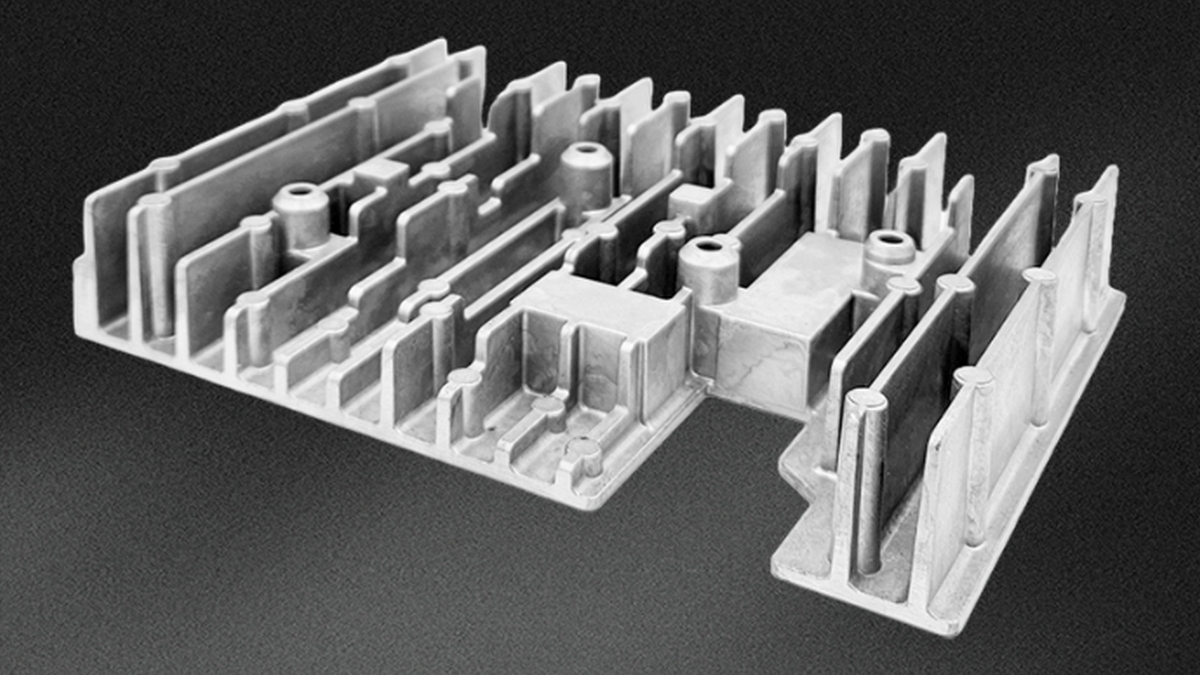
When the design includes ribs, bosses, thin sections, mounting features, or cosmetic surfaces, die casting usually offers a clear advantage. It supports near-net-shape production and often reduces the number of secondary operations required after forming.
Forging is typically less flexible in terms of geometry. It is more suitable for parts with simpler shapes, especially when strength matters more than integrated detail. If a part requires extensive machining to create design features after forging, the process may become less efficient overall.
Production Speed and Cost at Different Volumes
For medium- to high-volume production, die casting often delivers better efficiency because the cycle time is fast and dimensional consistency is strong. It becomes especially competitive when a complex part can be produced with fewer downstream processes.
Forging may involve more post-processing, but it can still be the better choice when higher strength reduces long-term performance risk. For that reason, cost should not be evaluated only at the unit-price level. A better comparison includes:
- tooling investment
- machining requirements
- finishing workload
- scrap risk
- assembly reduction
- long-term part performance
Best-Fit Applications for Die Casting
Die casting is generally the better choice when the part requires a combination of complex geometry, repeatable dimensions, and efficient production. It is often used for:
- housings and enclosures
- motor covers
- pump bodies
- heat sinks
- brackets
- gearbox covers
- lighting components
This process is especially valuable when several features can be integrated into a single aluminum part, helping reduce assembly steps and machining time.
Best-Fit Applications for Forging
Forging is generally the better choice when the part must deliver high strength, fatigue resistance, and long-term durability. It is commonly used for:
- suspension-related parts
- structural connectors
- high-load arms
- aerospace fittings
- heavy-duty joints
- safety-critical components
Where structural reliability is the primary concern and the geometry is relatively straightforward, forging often provides a more dependable solution.
Manufacturing Execution Matters as Much as Process Selection
Even after the right manufacturing process has been identified, production results still depend on execution quality, tooling control, and coordination across manufacturing stages. These factors affect dimensional consistency, yield, and overall part reliability.
In this area, GRAMOS supports aluminum component production with capabilities in both die casting and forging-related manufacturing.
- aluminum alloy die casting for precision components
- support for complex geometries and integrated part features
- mold development and coordinated production planning
- process management from manufacturing through final quality control
- one-stop service covering production and export support
- quality-focused operations designed to improve yield and consistency
- forging support for aluminum components with higher strength requirements
- solutions for structurally demanding part applications
- coordination of forming, secondary processing, and quality control
- manufacturing support aligned with part function and production needs
Effective production support helps ensure that the chosen process delivers the intended results in practice.
Choose Based on Process Fit, Not Assumption
Die casting and forging both play important roles in aluminum part manufacturing, but they are designed for different priorities. Die casting is often the better fit for complex, high-volume parts that benefit from efficient production and near-net shaping. Forging is often the better fit for parts that require higher strength, greater fatigue resistance, and dependable structural performance.The right manufacturing process is the one that best matches the part’s function, geometry, production goals, and performance requirements.

(4059)(20260924)(原).jpg)
(2367)(20260924)(原).jpg)