A deep dive into how purpose-built arms, carts, and workstations are reshaping clinical environments — and why one Taiwanese manufacturer is quietly leading the charge.
The modern hospital is a paradox. Billions are invested in surgical robots, AI-powered diagnostics, and precision imaging — yet the everyday tools clinicians rely on to access that technology are often an afterthought. Monitors perched on wobbly stands, cables snaking across ICU floors, nurses hunched over laptops balanced on linen carts: these are the unglamorous friction points that slow workflows, strain bodies, and quietly compromise patient safety.
It's a gap that specialty manufacturers are now racing to fill. Among them, Diwei Industrial — a Taiwan-based ergonomic mounting specialist founded in 1991 — has spent over three decades engineering custom arms, medical carts, and workstation solutions purpose-built for the unique demands of clinical spaces. And as healthcare design philosophy shifts from "equipment-first" to "workflow-first," their approach is gaining quiet but significant traction.
This article explores why customization matters in medical mounting, what a well-designed solution actually looks like across different departments, and how companies like Diwei are bridging the gap between clinical need and engineering reality.
The Problem: When Generic Hardware Meets Clinical Reality
Walk into any hospital and you'll see the same scene repeated in department after department: equipment that technically works, but doesn't truly fit. A monitor arm that can't swing far enough for a patient to see their own X-rays. A rolling cart that's too wide for the narrow corridor between ICU beds. A wall-mounted workstation that forces a 5'2" nurse to type at shoulder height — or a 6'1" physician to stoop.
These aren't mere annoyances. They're ergonomic hazards with measurable consequences.
Research published in the International Journal of Environmental Research and Public Health found that musculoskeletal disorders (MSDs) affect healthcare professionals at alarming rates: lower back pain prevalence exceeds 60% among surgeons, neck disorders hit roughly 40% of nurses, and shoulder injuries reach 47% across clinical staff. The European Working Conditions Survey corroborates this, ranking healthcare among the highest-risk sectors for work-related MSDs — driven largely by awkward postures, repetitive movements, and poorly fitted workstations.
Generic mounting hardware — designed for offices, not operating rooms — exacerbates the problem. It lacks the adjustability, hygiene standards, and spatial intelligence that clinical environments demand.
Customization is no longer a luxury. It's a clinical necessity.
The Three Pillars of Clinical Mounting: Arms, Carts, and Workstations
Diwei's medical portfolio is organized around three core product families, each targeting a distinct set of clinical workflows:
1. Medical Arms — Precision Positioning Where It Matters Most
From outpatient consultation rooms to high-acuity operating theaters, medical arms provide the articulation and reach that fixed mounts simply cannot.
Outpatient Clinics — Doctor-Patient Interaction Redefined
The consultation room is more than a workspace — it's a communication environment. Studies in patient-centered care consistently show that visual shared decision-making (where a clinician and patient look at the same screen together) improves patient trust, comprehension, and treatment adherence. A dynamic monitor arm makes this possible: the physician pivots the screen toward the patient to walk through lab results or imaging, then swings it back for documentation — all in seconds.
- Flexibility: Screens can be easily pivoted toward patients to explain test results or X-rays, fostering a sense of trust.
- Ergonomics: Height-adjustable features cater to physicians of all statures, reducing neck and spinal fatigue from long clinical hours.
- Space Optimization: Monitor arms elevate the screen to reclaim desk surface, providing a larger, more comfortable workspace.
- Dual-Monitor Solutions: View diagnostic reports simultaneously while performing clinical tasks, eliminating time wasted switching systems.
Diwei's Gas Spring Dual LCD Arm (7860S) exemplifies this approach, offering smooth height adjustment that accommodates clinicians of any stature, dual-monitor support for simultaneous diagnostic review and charting, and a desk-clamp design that reclaims surface area in often-cramped exam rooms.
ER, ICU, and General Wards — Bedside Arms Under Pressure
In emergency and critical care settings, the stakes are different: speed, stability, and spatial efficiency dominate. Equipment must be repositioned instantly, often one-handed, while maintaining absolute stillness once set. Cable management isn't cosmetic — it's a safety imperative in spaces where loose wires can snag IV lines or trip staff during resuscitations.
- Multi-axis Fluid Rotation: For effortless positioning and visibility.
- Maximized Wall Space Utilization: Keeping floors clear and workflows unobstructed.
- Synchronized Monitor and Keyboard Adjustment: Seamless, one-handed ergonomic height control.
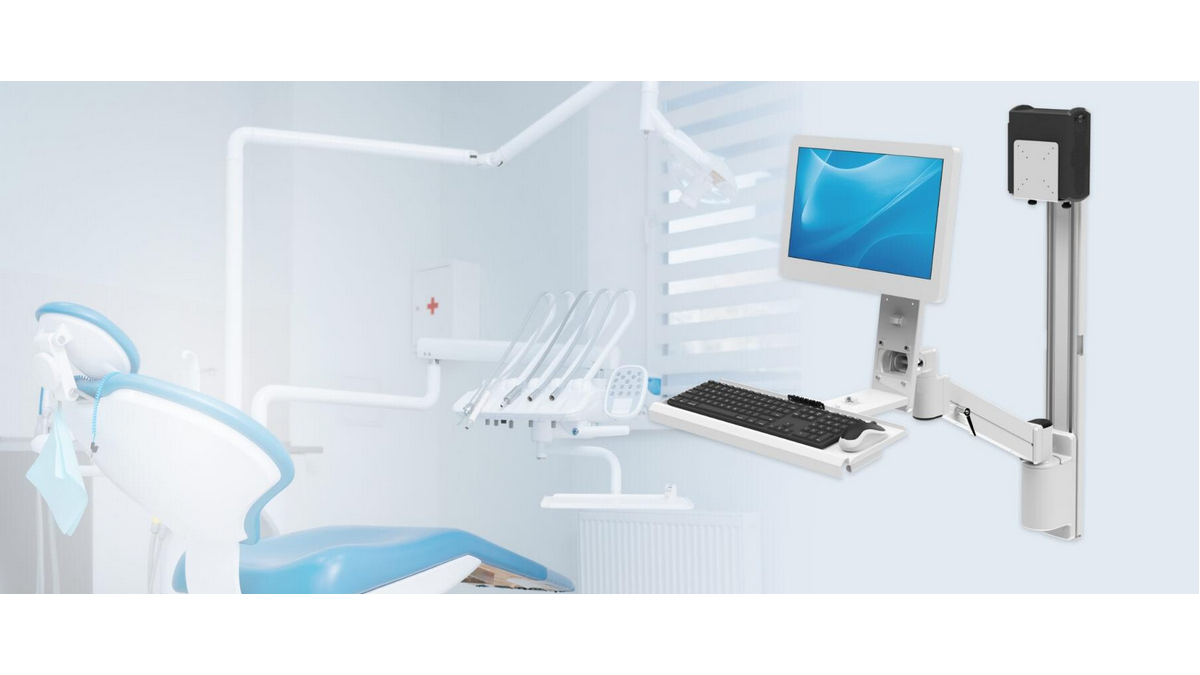
Diwei's Wall Mount Solutions (3720A series) address these needs with multi-axis fluid rotation, synchronized monitor-and-keyboard height adjustment for single-hand control, and wall-mounted configurations that keep floors entirely clear — critical in crowded bays where every square foot of floor space counts.
Operating Rooms — Ceiling-Mounted Surgical Booms
The OR demands the most stringent standards: zero floor clutter, antimicrobial surfaces, and multi-monitor suspension that provides surgeons with optimal viewing angles without neck strain. Ceiling-mounted boom systems like Diwei's 982CA Long-Reach LCD Monitor Ceiling Mount eliminate tripping hazards, deliver precise multi-axis positioning for surgical visualization, and feature full-surface antimicrobial coating to meet rigorous infection-control protocols.
- Multi-axis Fluid Rotation: For precise and effortless positioning.
- Spatial Maximization: Optimized footprint to ensure an unobstructed surgical environment.
- Advanced Hygiene: Full-surface antimicrobial coating for stringent infection control.
2. Medical Carts — Mobility Meets Infection Control
If arms are about precision, carts are about presence — bringing technology to the point of care, wherever that point happens to be.
Point-of-Care (POC) Carts for Nursing Rounds
Nurses spend a significant portion of their shift on the move. Traditional fixed workstations force them to walk back and forth between patient bedsides and central charting stations — an inefficiency that compounds across hundreds of daily interactions. Mobile POC carts eliminate this bottleneck, enabling real-time documentation at the bedside.
Diwei's Medical Single Monitor Cart with Gas Spring Lift (908AA) is designed around this workflow:
- Ergonomic Mobile Workstation: Height-adjustable Sit-to-Stand design with a lightweight aluminum structure, allowing caregivers to work comfortably in both seated and standing positions.
- Optimized Clinical Mobility: Equipped with smooth-rolling medical-grade casters and an ergonomic keyboard tray that promotes neutral wrist positioning, enabling efficient navigation and documentation during daily rounds.
- Healthcare-Ready Design: Antimicrobial powder-coated surfaces support infection-control protocols and simplify routine cleaning and maintenance.
Emergency Crash Carts
In code situations, every second of access delay has consequences. The 9280A Emergency Cart is engineered for rapid-deployment scenarios, with a mobile base that balances stability during use with agility during transport, and integrated storage that keeps critical supplies visible and accessible.
Telehealth & Mobile Consultation Carts
The telehealth market is projected to reach USD 180.86 billion by 2030, growing at 11.5% CAGR, and hybrid care models (blending in-person and virtual visits) are now preferred by 82% of patients and 83% of providers. But telehealth only works if the technology is mobile and stable enough to go bedside at a moment's notice.
Diwei's 9120A Telehealth Workstation on Wheels is purpose-built for this reality:
- High-Capacity Video Cart: Professional camera bracket and large-screen mounting for crystal-clear teleconsultation.
- Stable Mobile Base: Ensures equipment safety during transit, with integrated power management for extended all-day use.
3. Workstations — Stationary Intelligence, Space-Efficient Design
Not every clinical task requires mobility. Pharmacists, lab technicians, and administrative staff need stable, dedicated workstations — but they also need those workstations to disappear when not in use, freeing up precious counter and floor space.
Fold-Away Wall Workstations for Pharmacy and Lab
Pharmacies and labs are environments where counter space is a premium resource. Scanners, balances, computers, and documentation systems compete for every available inch. Diwei's 372DA/372EA Wall-Mounting Solutions offer instant-access, instant-stow flexibility:
- Fold-Away Wall Workstations: Instant-access, instant-stow flexibility — fold flat against the wall when not in use to reclaim valuable counter space.
- Height-Adjustable Design: Ensures pharmacists and technicians operate scanning and documentation systems at the most ergonomic working height.
The Hygiene Factor: Why Surface Coating Is a Life-and-Death Specification
In healthcare hardware discussions, ergonomics and mobility dominate the conversation. But there's a less visible — yet arguably more consequential — specification: antimicrobial surface treatment.
Healthcare-Associated Infections (HAIs) affect approximately 1 in 31 hospital patients in the United States at any given time, according to the CDC. The direct medical cost exceeds $30 billion annually. A landmark study published in Clinical Infectious Diseases found that antimicrobial surface coatings applied to patient rooms led to statistically significant reductions in both HAI rates and environmental bioburden. Another study in the Journal of Hospital Infection reported that copper surfaces in ICUs reduced HAI incidence by 58%.
These aren't abstract statistics. They translate directly into patient outcomes and institutional costs — which is why mounting hardware with antimicrobial properties is rapidly moving from "nice-to-have" to "procurement requirement."
Diwei's entire medical range features specialized antimicrobial powder coating engineered to withstand repeated disinfection with harsh chemical solvents — including alcohol and chlorine-based solutions — without compromising coating integrity. This isn't a surface treatment applied as an afterthought; it's baked into the manufacturing process from the outset, ensuring that every touchpoint on a cart, arm, or workstation contributes to infection control rather than undermining it.
OEM/ODM: Why Customization Capability Is the Real Differentiator
For healthcare system integrators and equipment distributors, off-the-shelf products are often only a starting point. Real-world projects have constraints that catalogs can't anticipate: proprietary device interfaces, unusual room geometries, regional certification requirements, or branding specifications that demand visual consistency across an entire facility.
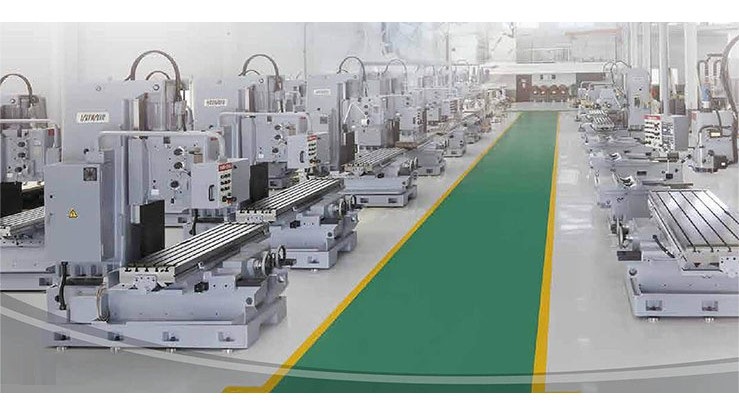
This is where Diwei's OEM and ODM capabilities become a decisive advantage. Their in-house R&D team — operating from a 10,000+ square-meter integrated manufacturing facility in Taichung, Taiwan — can design bespoke mounting arms and workstations tailored to the interface specifications of virtually any medical device brand. The process covers the full arc from concept through production:
- Custom interface development for specific medical devices and monitors
- Modular architecture that can be adapted across product families
- International certification support, including CE compliance for global procurement
- Branded finishes and color programs for visual consistency
- Rigorous life-cycle testing in comprehensive in-house testing facilities
For buyers, this means moving from specification to finished product with fewer handoffs and less coordination overhead — a significant advantage when project timelines are measured in weeks, not months.
The Bigger Picture: Designing for the Clinical Scene, Not Just the Product
What distinguishes a truly medical-grade mounting manufacturer from a general hardware supplier isn't just product specs — it's design philosophy.
Diwei articulates this as "clinical scene optimization": the recognition that a mounting solution isn't an isolated product, but an element within a complex spatial ecosystem. The ER demands rapid mobility. The outpatient clinic demands ergonomic versatility and patient-facing flexibility. The OR demands absolute spatial discipline and hygiene. The patient ward demands a soothing, uncluttered environment.
Each of these scenes requires a different configuration of the same underlying principles: ergonomics, hygiene, spatial efficiency, and workflow integration. A manufacturer that understands these distinctions — and can customize around them — delivers more value than one that simply sells a catalog.
This philosophy is reflected in Diwei's integrated design approach:
- Concealed cable management that removes visual noise and trip hazards
- Multi-functional architectures that combine monitor support, keyboard access, and device integration in a single unit
- Antimicrobial surfaces that serve dual duty as both infection-control measure and durability feature
A Practical Fit: Who Benefits Most?
Diwei's medical mounting solutions are particularly well-suited for:
| Stakeholder |
Key Benefit |
| Hospital facility planners |
Customizable solutions that fit specific departmental layouts and workflows |
| Medical device manufacturers |
OEM/ODM mounting integration for their equipment lines |
| System integrators |
One-stop design-to-production capability reducing project complexity |
| Healthcare architecture firms |
Ergonomic and hygienic mounting systems that complement evidence-based design |
| Distributors serving healthcare |
A diversified product range (arms, carts, workstations) from a single source |
Conclusion: The Mounting Solution Is the Infrastructure
In healthcare, the conversation about technology typically focuses on what the technology does — the diagnostic power, the surgical precision, the data analytics. Far less attention is paid to how clinicians physically interact with that technology throughout a 12-hour shift.
This gap is real, and it's consequential. It shows up as musculoskeletal injuries, workflow bottlenecks, infection control failures, and spaces that feel more like equipment warehouses than healing environments.
Custom medical mounting solutions — purpose-built arms, mobile carts, and ergonomic workstations — address this gap directly. They're not the most expensive line item in a hospital build-out, but they may be among the most impactful per dollar spent.
Diwei's three-decade track record in ergonomic mounting, combined with their vertically integrated manufacturing, OEM/ODM flexibility, and medical-grade surface engineering, positions them as a quiet but credible force in this space. For healthcare organizations that recognize the difference between installing equipment and designing clinical environments, their solutions are worth a serious look.
About Diwei Industrial
Founded in 1991 in Taichung, Taiwan, Diwei Industrial is an ISO 9001-certified manufacturer specializing in ergonomic mounting solutions. Operating from a 10,000+ m² integrated facility, the company designs, manufactures, and exports medical arms, medical carts, monitor arms, wall-mount workstations, and telehealth carts for healthcare, office, education, and industrial markets worldwide. All products are covered by Product Liability Insurance up to US$3,000,000 globally. Diwei welcomes OEM and ODM partnerships.
Learn more: Diwei Medical-care Mounting Solutions