Why the extra stock left on a forging can determine machining time, dimensional stability, and total part cost.
Forging and CNC machining are often treated as separate manufacturing stages, but the economics and accuracy of the finished component depend on how well the two are planned together. One of the most important links between them is forging allowance: the intentional extra material left on a forged surface so that later machining can bring the part to its final dimensions and surface condition.
Adding more allowance may seem safer because it gives the machinist room to remove surface variation and correct dimensional deviations. Yet excessive allowance also means purchasing, forging, handling, and ultimately cutting away more material. The objective is not to maximize allowance, but to leave enough stock for reliable cleanup without creating unnecessary machining.
What Forging Allowance Actually Means
Forging allowance should not be confused with forging tolerance. Allowance is deliberately added material; tolerance describes how far the as-forged dimension may vary. ASM guidance notes that allowances, tolerances, flatness, and concentricity must be established so forgings can be machined to final dimensions. Industry guidance also recognizes that forging processes have practical dimensional limits.
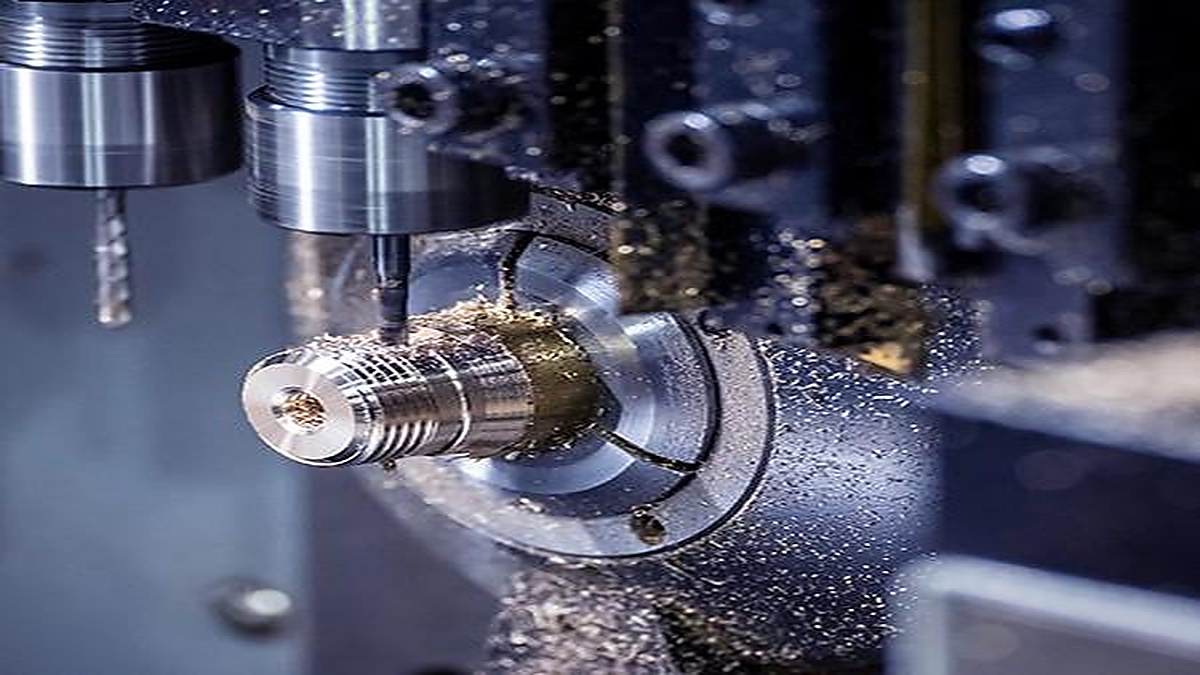
If a finished face must end at a specific dimension, the forging may therefore be produced slightly oversized. CNC roughing removes most of that excess, while finishing establishes final size, geometry, and surface finish. The required stock depends on the forging process, component size, alloy, die condition, heat treatment, surface condition, and the capabilities of both the forge shop and machine shop.
How Allowance Affects Cost
The first effect is material. Extra stock increases forging weight even though much of that material may later become chips. This matters on large aluminum or high-value alloy parts, where a few extra millimeters across broad surfaces can add meaningful mass.
The second effect is machining time. NIST cost-estimation research models machining cost largely as machine rate multiplied by machining time. More material removal usually means additional cutting passes, longer spindle time, more chip handling, and greater tool engagement.
Heavy roughing can also complicate process planning. It may require more rigid fixturing, semi-finishing steps, or additional setups. In thin-wall or asymmetric parts, removing substantial stock may release residual stresses and contribute to distortion. A conservative allowance can therefore create downstream costs that are not obvious when the forging is evaluated only by weight.
Why Too Little Allowance Is Also Expensive
Reducing stock too aggressively creates the opposite problem: the CNC process may not have enough material to clean up the forging consistently.
Forged parts can show normal variation from die closure, die wear, mismatch, thermal contraction, straightness, and flatness. Surface irregularities may also require removal. If the available stock is smaller than the combined effect of these variations, a cutter may reach the final dimension before the surface is fully machined. ASM specifically treats finish allowances alongside dimensional, match, die-closure, straightness, flatness, and surface tolerances in forging design.
That can leave an unmachined patch or a feature that cannot meet geometric requirements. Rework, extra inspection, engineering review, and scrap can quickly outweigh the material saving. Allowance should therefore be evaluated as a machining envelope rather than only as a nominal number.
Allowance and Final CNC Accuracy
A larger allowance does not automatically produce a more accurate finished part. Final CNC accuracy still depends on machine capability, tooling, workholding, probing, temperature, datum strategy, cutting forces, and inspection. Forging allowance mainly determines whether the machinist starts with enough usable material in the correct location.
| Allowance Strategy |
Likely Machining Effect |
Main Risk |
| Too small |
Less roughing and fewer chips |
Incomplete cleanup or insufficient stock |
| Balanced |
Predictable roughing and finishing |
Requires reliable forging capability data |
| Too large |
More stock removal and cycle time |
Higher material use, tool wear, and distortion risk |
Datum planning is particularly important. If the forging drawing, inspection method, and CNC setup reference different locations, tolerance stack-up can consume the available stock. ASM guidance highlights consistent tooling points and datum planes as a way to simplify control between forging and finish machining.
Finding the Economic Sweet Spot
The best allowance is application-specific. Closed-die and precision forgings can often be produced closer to net shape than large open-die forgings, but tighter forging control may require better tooling, closer billet-volume control, controlled temperatures, sizing operations, or additional inspection. Near-net-shape forging can reduce secondary machining, but the benefit depends on volume and the value of the machining time saved. The Forging Industry Association documents examples in which close-tolerance forging reduces later machining while requiring tighter process control.
A practical approach is to treat forging and CNC machining as one process chain. Engineers should review the final CAD model, parting line, draft, radii, heat-treatment sequence, expected dimensional variation, machining datums, inspection plan, and annual volume together. The target is a forging envelope robust enough for production variation but close enough to final geometry to keep machining efficient.
FAQ
1. Is forging allowance the same as machining allowance?
They often overlap in everyday usage because both refer to stock left for later machining. On technical drawings, however, allowance should remain distinct from dimensional tolerance.
2. Does a tighter forging tolerance always reduce CNC cost?
No. It may reduce stock and cycle time, but tighter forging control can increase tooling, process-control, inspection, or scrap costs.
3. Can CNC machining compensate for a poor forging?
Only within limits. Machining can correct many conditions when sufficient stock exists, but it cannot recover material where the forging is already below the required boundary.
4. Why can heavy rough machining cause distortion?
Forging, heat treatment, and cooling can leave residual stresses. Removing material changes that stress balance, which may cause thin or uneven sections to move.
5. Is near-net-shape forging always preferable?
No. It is most attractive when material and machining savings justify the added forging precision or tooling investment.
6. How should allowance be selected for aluminum forgings?
Consider forging method, alloy and temper, part size, heat-treatment distortion, surface requirements, supplier capability, machining datums, and final tolerances. Published aluminum forging guidance covers design and tolerance considerations, but actual supplier process capability should also be reviewed.
Conclusion
Forging allowance is a relatively small design parameter with system-level consequences. Too much stock increases material consumption and machining effort; too little can undermine cleanup and dimensional compliance. The best result is usually a controlled machining envelope based on realistic forging variation, clear datums, and coordinated planning between forging and CNC operations.
For engineers evaluating an aluminum forged-and-machined component, reviewing both stages together can make it easier to balance near-net-shape forging, machining access, tolerance strategy, and production cost. For a closer look at how these processes can be integrated in practice, explore Al Forge Tech’s aluminum forging and machining capabilities: Al Forge Tech — Aluminum Forging & Machining.

(4059)(20260924)(原).jpg)
(2367)(20260924)(原).jpg)