A practical guide to choosing between airless pump packaging and traditional cosmetic jars for skincare, beauty, and personal care formulas.
Packaging is often discussed in terms of appearance, cost, and branding, but for cosmetic products, it also plays a direct role in how a formula is protected, dispensed, stored, and experienced by the user. Two of the most common options for creams, lotions, gels, balms, and skincare treatments are airless bottles and cosmetic jars. At first glance, the difference may seem simple: one uses a pump, while the other uses a wide-mouth container. In practice, the choice can influence product stability, contamination risk, dosage control, perceived value, and even how confidently consumers use the product after opening.
There is no single “best” packaging format for every cosmetic formula. Airless bottles are often selected for formulas that benefit from reduced air exposure and controlled dispensing. Cosmetic jars remain popular for rich textures, masks, balms, and products where direct scooping supports the intended user experience. The important question is not which package is universally superior, but which one best fits the formula, usage pattern, market positioning, and consumer expectations.
Why Packaging Matters for Formula Protection
Cosmetic formulas are complex systems. Many contain water, oils, emulsifiers, thickeners, botanical extracts, fragrance components, preservatives, and active ingredients. Over time, formulas may be affected by oxygen exposure, repeated contact with fingers or applicators, heat, light, and microbial contamination. The U.S. FDA notes that dipping fingers into a cosmetic product can introduce microorganisms, and that preservatives may break down over time, allowing bacteria and fungi to grow. Products containing plant-derived materials or non-traditional preservative systems may also require careful shelf-life consideration.
Packaging cannot replace good formulation, preservative efficacy testing, manufacturing hygiene, or stability testing. However, it can support those controls by limiting how much the product is exposed during normal use. A review on cosmetic preservation notes that packaging configuration is one of the factors influencing contamination risk, with jars and bottles generally more accessible to contamination than closed systems such as airless pumps.
How Airless Bottles Work
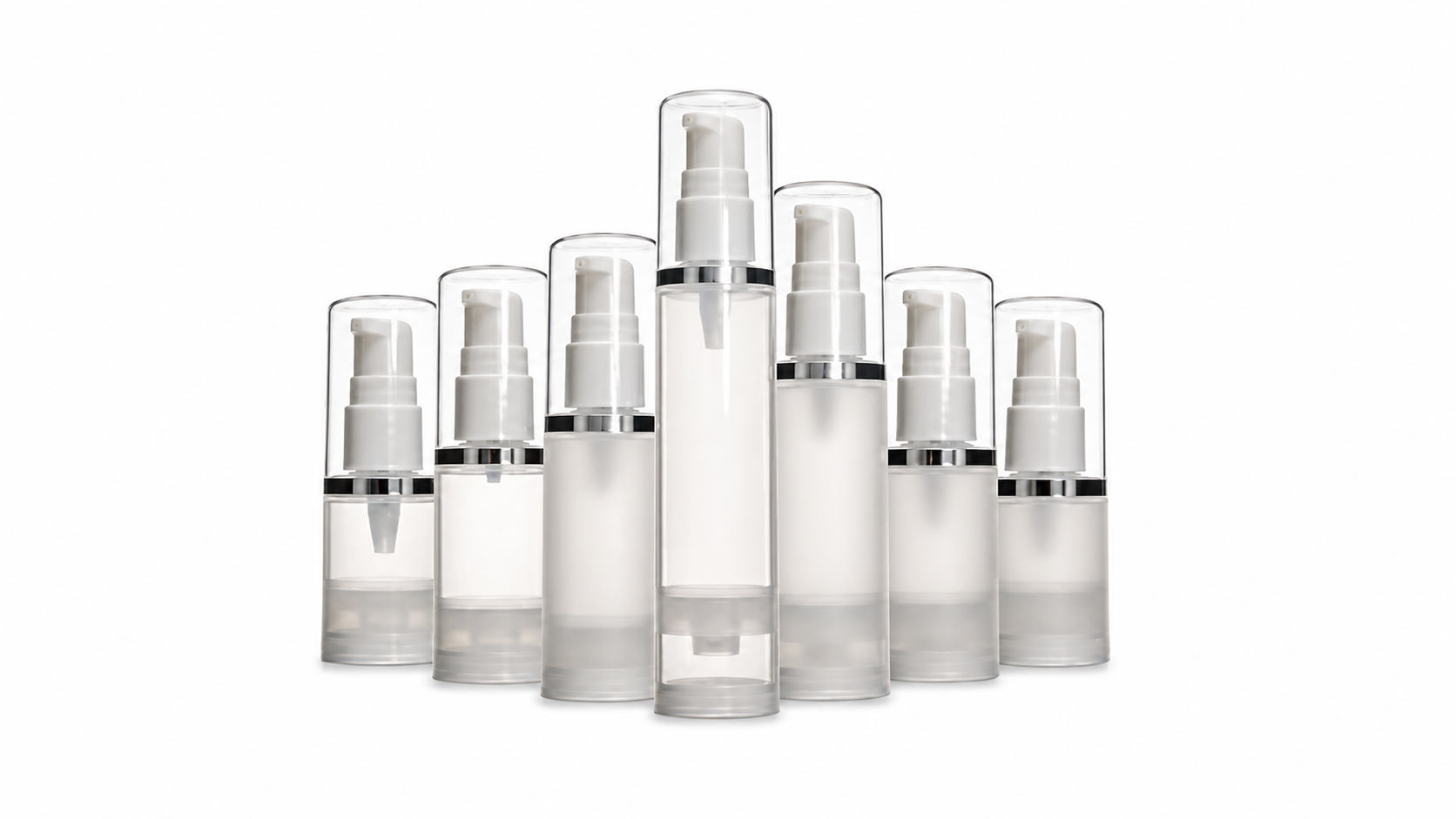
Airless bottles are designed to dispense product without requiring the container to be repeatedly opened. Instead of a dip tube that draws product upward from the bottom, many airless systems use a piston, pouch, or vacuum-style mechanism that pushes the formula toward the pump as the user dispenses it. This reduces the amount of air entering the primary chamber during use.
For skincare brands, this format is especially useful for lotions, emulsions, serums, eye creams, gels, and treatment products that require controlled dispensing. The pump helps deliver a consistent amount of product while keeping the remaining formula less exposed to the external environment. This does not mean an airless bottle makes a product sterile or eliminates all stability concerns, but it can reduce routine contact with air and fingers compared with a jar.
Airless packaging can also improve consumer perception. A pump format often feels cleaner, more precise, and more suitable for premium or treatment-oriented skincare. Users can apply the product without placing fingers directly into the container, which can be reassuring for products used on the face, around the eyes, or in professional environments.
How Cosmetic Jars Work
Cosmetic jars are wide-mouth containers that allow users to scoop, swipe, or apply product directly from the package. They are common for face creams, body butters, cleansing balms, hair masks, sleeping masks, exfoliating scrubs, and clay-based products. Jars are especially practical when a formula is too thick, dense, or textured to pass easily through a pump mechanism.
From a user experience perspective, jars have strong advantages. They allow consumers to see the texture, color, and amount of product remaining. They also make it easy to access every part of the formula, which can reduce frustration near the end of use. For products where sensory experience is important, such as rich creams or spa-style masks, opening a jar can be part of the product ritual.
However, jars require more attention to hygiene. Because users may touch the formula directly, brands often provide a spatula or recommend clean hands before use. For formulas with high water content, natural ingredients, or reduced preservative systems, the jar format should be evaluated carefully through stability and microbiological testing.
Airless Bottles vs. Cosmetic Jars: What Differences
| Factor |
Airless Bottles |
Cosmetic Jars |
| Formula exposure |
Lower exposure during dispensing |
Higher exposure after opening |
| User contact |
Minimal direct contact with remaining product |
Fingers or spatulas may contact product |
| Dosage control |
Usually more consistent |
Less precise, user-controlled |
| Texture suitability |
Best for flowable creams, lotions, gels, serums |
Best for thick creams, balms, masks, scrubs |
| Consumer perception |
Clean, modern, premium, treatment-focused |
Sensory, familiar, generous, spa-like |
| End-of-use access |
Depends on pump and design efficiency |
Easy to reach remaining product |
| Compatibility needs |
Must match viscosity and pump function |
Must match material, closure, and formula stability |
Formula Type Should Guide the Choice
The most practical way to compare airless bottles and cosmetic jars is to start with the formula. A lightweight lotion, vitamin-enriched serum, or eye cream may benefit from an airless bottle because controlled dispensing and reduced exposure align with the intended use. A dense balm, whipped body butter, or exfoliating scrub may be better suited to a jar because the formula may not dispense smoothly through a pump.
Viscosity matters. If a formula is too thick, grainy, or unstable under pump pressure, an airless bottle may create dispensing problems. If a formula is fluid enough to move through an airless mechanism, the format can help improve convenience and reduce mess. Packaging compatibility studies are also important because a formula may interact differently with plastic, glass, pumps, closures, liners, or internal components over time.
Microbiological protection should also be considered. ISO 11930 provides a procedure for interpreting data from preservation efficacy testing or microbiological risk assessment for cosmetic products. This reinforces the broader point that packaging choice should be evaluated together with preservative strategy and expected consumer use, not treated as a purely visual decision.
User Experience and Brand Positioning
Beyond protection, packaging affects how people use and perceive a cosmetic product. Airless bottles support a clean, controlled, and efficient experience. They are often associated with dermatologist-style skincare, anti-aging formulas, brightening treatments, sensitive-skin products, and products that emphasize active ingredients.
Cosmetic jars provide a different kind of value. They allow consumers to interact with the product more directly, which can be important for textures that are part of the appeal. A thick cream or mask in a jar may feel more indulgent and easier to apply in generous amounts. For body care or rinse-off products, the tactile experience may matter more than precise dosage.
Sustainability and recyclability are also part of the decision. A simple jar may be easier to separate, clean, or recycle depending on the material and local recycling systems. Airless packaging may involve multiple components, which can complicate recycling, although designs vary widely. Cosmetic packaging selection increasingly needs to balance product protection, consumer experience, material reduction, and end-of-life considerations. Cosmetics Europe has noted that packaging regulations are placing more attention on waste reduction and packaging efficiency in the cosmetics sector.
FAQ
1. Are airless bottles always better than cosmetic jars?
No. Airless bottles are useful when reduced exposure and controlled dispensing are important, but jars may be more suitable for thick creams, balms, scrubs, or masks. The best choice depends on the formula, usage habits, brand positioning, and packaging compatibility.
2. Do airless bottles make cosmetics last longer?
They may help protect formulas by reducing repeated exposure to air and direct user contact, but they do not automatically extend shelf life. Shelf life still depends on formulation, preservatives, manufacturing quality, storage conditions, and testing.
3. Are cosmetic jars unsafe?
Cosmetic jars are widely used and can be appropriate when designed and tested properly. The main concern is that users may introduce microorganisms by touching the formula. Clear usage instructions, clean hands, spatulas, and suitable preservative systems can help manage this risk.
4. Which packaging is better for sensitive skincare formulas?
Airless bottles are often preferred for formulas where minimizing air and finger contact is desirable, such as facial treatments or sensitive-skin products. However, the final decision should be based on formula testing and compatibility with the selected package.
5. Can thick creams be used in airless bottles?
Some thick creams can be used in airless systems, but not all. The formula must be compatible with the pump mechanism, piston or pouch design, and dispensing channel. Very dense, grainy, or waxy formulas may work better in jars.
6. What should brands test before choosing packaging?
Brands should test formula stability, packaging compatibility, dispensing performance, leakage resistance, microbiological protection, consumer usability, and transportation durability. These tests help confirm that the package works not only at launch, but throughout the product’s intended shelf life.
Conclusion
Airless bottles and cosmetic jars each serve important roles in cosmetic packaging. Airless bottles are well suited to formulas that benefit from cleaner dispensing, controlled dosage, and reduced exposure during use. Cosmetic jars remain valuable for rich, textured, sensory, or high-viscosity products that users expect to scoop or apply generously.
For cosmetic brands, the right packaging choice should begin with the formula and end-user behavior, not only with appearance. A package should protect the product, support safe and convenient use, communicate the intended brand experience, and remain practical for production and distribution. When these factors are considered together, packaging becomes more than a container—it becomes part of the product’s performance.
For brands evaluating bottles, jars, pumps, caps, and other cosmetic packaging formats, Pin Mao offers a broad product category range that includes cosmetic bottles, plastic cosmetic jars, airless bottles, dispenser pumps, spray pumps, closures, and related packaging components. Reviewing available packaging options can help brands compare practical formats and select a solution that better matches their formula, market positioning, and user experience goals.

(2367)(20260924)(原).jpg)