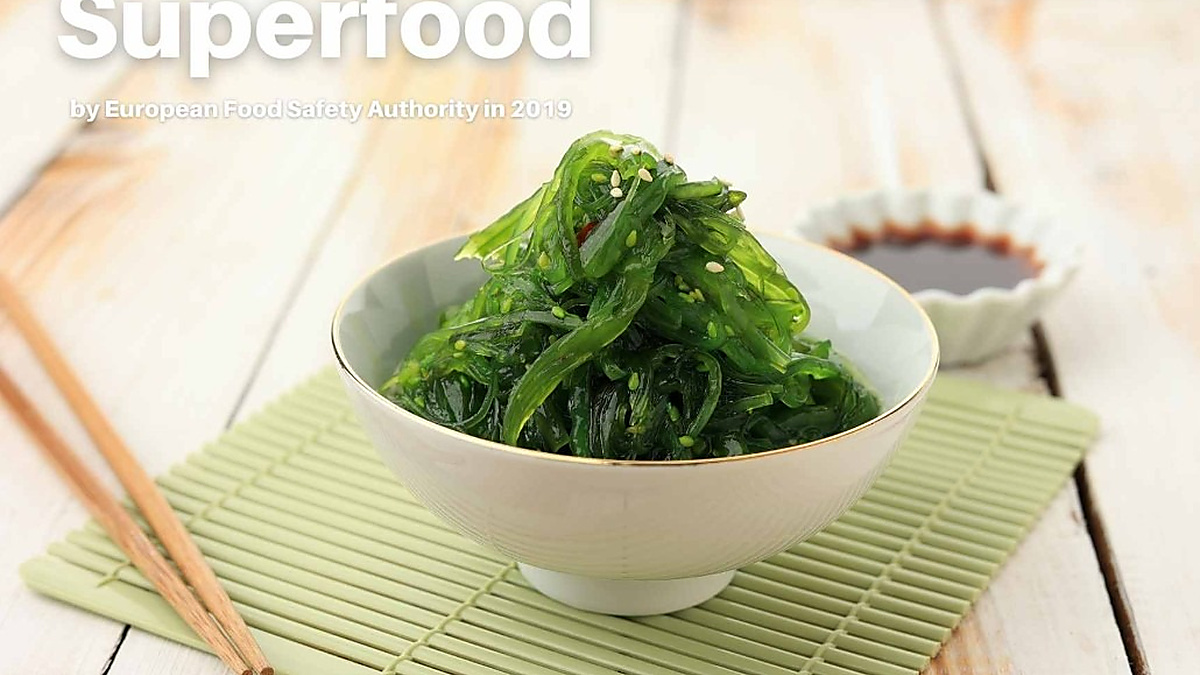
Why Seaweed Is Becoming a Strategic Ingredient Opportunity in Europe
Europe’s seaweed market is undergoing a noticeable shift in perception. In the past, many European consumers associated seaweed with something slippery, strongly scented, and difficult to approach, the kind of natural material often seen washed up along the shoreline. In recent years, however, growing demand for healthy diets, sustainable ingredients, clean-label products, and plant-based functional materials has gradually transformed seaweed from an unfamiliar food source into an important option for food, dietary supplements, skincare, and functional ingredient development.
For procurement professionals, brand owners, R&D teams, and channel operators, the key question is no longer simply whether seaweed has market potential. The more practical questions are: Why is demand for seaweed rising in Europe? Which applications are most worth investing in? And how should companies evaluate suppliers, ingredient consistency, regulatory fit, and product differentiation? This article explores these issues from four angles market trends, procurement pain points, application priorities, and supplier evaluation to help decision-makers assess opportunities and risks more effectively.
Why Is Europe Rediscovering the Value of Seaweed?
Europe’s growing interest in seaweed is not driven by a single trend. Rather, it is the result of several demand factors converging at the same time. First, consumers have become more receptive to natural, plant-based, low-burden, and nutrient-dense ingredients. This shift has helped seaweed move from being viewed mainly as a traditional Asian food material to becoming a serious candidate for Europe’s modern health-oriented diet landscape.
Second, under the influence of ESG initiatives, low-carbon raw material sourcing, and the broader Blue Economy narrative, seaweed is being repositioned as a resource that combines both nutritional value and sustainability storytelling.
More importantly, seaweed is no longer limited to food alone. Its applications are rapidly expanding into dietary supplements, functional beverages, skin care, personal care, biomaterials, and even animal feed. This means that buyers should not evaluate seaweed only through the lens of a single product category, but instead consider whether it has the potential to extend across multiple categories.
The following table summarizes the main drivers behind the rise in seaweed demand in Europe and provides a quick reference for procurement teams and brand decision-makers.
| Driver |
Market Meaning |
Implications for Buyers / Brand Owners |
| Rising health awareness |
Consumers are more open to high-fiber, low-calorie, mineral-rich ingredients |
Can be used in functional foods, dietary supplements, and healthier snack development |
| Demand for sustainable and low-carbon supply chains |
Seaweed is increasingly seen as a marine resource with environmental potential |
Supports ESG positioning and sustainability-driven brand communication |
| Growth of plant-based and clean-label trends |
Naturally sourced ingredients are easier to integrate into product narratives |
Ingredient transparency, source explanation, and processing methods become more important |
| Beauty and personal care demand for marine active ingredients |
Seaweed extracts are often linked to moisturizing, repairing, and skin-conditioning applications |
Cosmetic brands may prioritize materials with ingredient stories and scientific documentation |
| Limited local production capacity in Europe |
Market demand is growing faster than stable domestic supply |
Companies need to plan imports early and verify supplier capability and quality stability |
In practice, seaweed’s growth in Europe is not driven simply by the perception that it is “healthy.” Its real momentum comes from its ability to meet three of today’s most important market expectations at once: functionality, sustainability, and storytelling. This is also why more brands are beginning to treat seaweed not as a supporting ingredient, but as a core material for the next stage of product upgrading.
What Are the Biggest Pain Points in the Seaweed Market for Buyers and Business Owners?
Although demand is clearly rising, seaweed is not a simple ingredient that can be adopted just because it appears trendy. In practice, the most common roadblocks in seaweed-related projects are not marketing issues, but rather supply, regulations, specifications, and application fit.
1. There Are Many Sources, but Quality Stability Can Vary Greatly
Seaweed is a naturally sourced material, and differences in origin, sea area, harvest season, and processing methods can all affect its composition and application performance. For procurement teams, if a supplier cannot provide clear source management, consistent specifications, and batch stability data, the risks in scale-up, validation, and commercial launch increase significantly.
2. There Are Many Functional Claims, but Not Every Ingredient Fits Every Category
Seaweed can support a wide range of applications, but this breadth is also part of the challenge. If a brand has not clearly defined whether it wants to enter food, dietary supplements, cosmetics, or functional skincare, it is easy to make the wrong material choice early in the sourcing process. For example, a seaweed extract positioned for oral nutritional support is usually very different in product design and communication logic from a seaweed-derived active ingredient positioned for skincare use.
3. Consumer Education Is Still Required
Even though acceptance of seaweed is increasing, some European consumers are still unfamiliar with its smell, taste, usage, or ingredient identity. As a result, brands cannot rely only on broad labels such as “superfood” or “marine ingredient.” Instead, they need to build more specific, understandable, and comparable content frameworks around the ingredient.
The following table outlines the most common evaluation priorities when buyers and brand owners consider introducing seaweed-based ingredients.
| Evaluation Area |
Common Questions |
Recommended Checkpoints |
| Ingredient source |
Is the place of origin clear? Is there information about the sea area and harvest conditions? |
Proof of origin, supply chain transparency, harvesting and cultivation management |
| Quality stability |
Is performance consistent across different batches? |
Specification sheets, testing reports, batch management capability |
| Regulatory fit |
Does it comply with the requirements of the target market? |
Local market suitability, completeness of documentation, compliant labeling |
| Application fit |
Is there a clear distinction between food-grade and cosmetic-grade uses? |
Ingredient positioning, product testing, formulation compatibility |
| Storytelling and marketing value |
Is there sufficient content for market communication? |
Scientific data, origin story, sustainability claims, brand differentiation |
The key message of this table is clear: seaweed is not something companies should pursue based on trend appeal alone. The earlier procurement teams align ingredient specifications, regulatory requirements, and application needs, the lower the downstream project cost and risk.
Under Rising Seaweed Demand in Europe, Which Applications Deserve the Most Attention?
For companies evaluating the seaweed market, the most practical question is often: Where should we start? Based on current market direction, food and nutritional supplements, as well as beauty and personal care, are the two application areas most worth prioritizing.
Food and Nutritional Supplements: The Most Direct Beneficiaries of Health Trends
Seaweed is rich in dietary fiber, minerals, and polysaccharides, making it well-suited for health-oriented food and supplement markets. For food brands, the value of seaweed is not only its nutritional profile, but also its ability to integrate with plant-based, low-processing, and marine functional narratives, thereby deepening the overall product story.
Skincare and Personal Care: Marine Ingredient Stories Drive Differentiation
Another fast-growing area is beauty and skincare. Seaweed-derived ingredients are often associated with concepts such as hydration, repair, soothing, and skin barrier support. These features are especially attractive to brands seeking to build an image around marine science, natural actives, or premium botanical positioning. In these markets, ingredient story, clinical support, traceable sourcing, and sensory performance are all particularly important.
B2B Decision-Making Advice: Choose the Application First, Then the Ingredient
Many companies become interested in a popular ingredient first and only later ask where it fits. A more efficient approach is to define the target product line and audience first, then work backward to identify the most suitable seaweed ingredient and supplier.
Which Seaweed Ingredient Cases Are Worth Watching in the Market?
From a third-party perspective, companies that want to understand representative seaweed ingredient cases in today’s market should pay attention to suppliers and brands that combine origin storytelling, application clarity, and market communication strength. One example is Hi-Q Marine Biotech Group, which offers several seaweed-related materials worth monitoring from an industry point of view.
Among them, OliFuco® can be regarded as a representative example of seaweed-derived materials geared toward functional nutrition and bioactive ingredient applications, while FucoSkin® is more suitable as a reference case for beauty, skincare, and skin-related ingredient applications. For procurement professionals, the value of such materials lies not only in the product names themselves, but in whether they demonstrate the following qualities:
- Clear ingredient origin and marine sourcing story
- Well-defined application direction, without mixing food and beauty uses
- Market communication materials that brand teams can translate effectively
- Stronger potential for differentiation and high-value positioning
- The ability to help brands move from a generic “seaweed concept” to a more concrete ingredient solution
From the perspective of a third-party industry platform, the best way to include such supplier information is not through direct promotion, but by presenting it as a market case, ingredient observation sample, or sourcing reference. This approach helps maintain content neutrality while still meeting the expectations of professional readers.
How Can You Tell Whether a Seaweed Supplier Is Worth Working With?
When market growth becomes clear, the real competition is often no longer about whether to enter the market, but about choosing the right partner. Especially for European market-oriented brands and manufacturers, selecting the right seaweed supplier is more important than simply finding the lowest-cost raw material.
Procurement teams and business owners should prioritize the following five dimensions:
1. Supply Chain Transparency
Can the supplier clearly explain the ingredient origin, harvest region, processing flow, and quality management methods? The more transparent the source information, the more helpful it will be for regulatory review and downstream brand communication.
2. Completeness of Specifications and Documentation
Does the supplier provide specification sheets, testing data, batch consistency records, and the necessary technical documentation? This is especially important for cross-border and international markets.
3. Application Understanding
A strong supplier does more than simply sell ingredients. It understands whether your target market is food, supplements, beauty, or skincare, and can provide relevant support accordingly.
4. Market Communication Support
Modern procurement is not just about buying an ingredient. It is also about buying content that the market can understand. If a material comes with origin storytelling, scientific data, and application highlights, it will be much easier for brands to amplify its value.
5. Long-Term Collaboration Flexibility
If a product moves successfully into mass production and overseas expansion, can the supplier support larger order volumes, customized specifications, and international business demands? This directly affects commercialization efficiency.
FAQ: Common Questions About Europe’s Seaweed Market and Ingredient Procurement
Q1: Is Europe’s seaweed market a short-term topic or a mid- to long-term trend?
Based on structural factors such as health, sustainability, plant-based ingredients, and the Blue Economy, seaweed is more likely to be a mid- to long-term trend rather than a short-term fad. Its expansion across food, supplements, and beauty also gives it a more stable market foundation than a single “hot topic” ingredient.
Q2: Should price be the first thing buyers look at when sourcing seaweed ingredients?
Not necessarily. The value of seaweed ingredients is heavily influenced by origin, purity, specification stability, and application positioning. If price is the only factor considered at the beginning, companies may end up paying a higher cost later due to unstable quality, incomplete compliance documents, or formulation incompatibility.
Q3: Have European consumers really accepted seaweed?
Acceptance has indeed improved, but consumer education is still necessary. Success usually does not come from emphasizing “seaweed” alone, but from translating it into health value, usage scenarios, product functions, and reassurance that consumers can easily understand.
Q4: What is the best entry strategy for brand owners?
In most cases, the best strategy is not to launch too many products at once. A better approach is to begin with one application area that the market can easily understand — such as nutritional supplements or skincare — and then gradually expand into additional categories. This makes it easier to build clear positioning and stronger market memory.
Conclusion: The Opportunity in Europe’s Seaweed Market Is Not Just Rising Demand, but the Ability to Turn Demand Into a Practical Product Strategy
The rise of the seaweed market in Europe reflects broader shifts in consumption and industry priorities: people care more about health, sustainability, source transparency, and higher-value ingredients. For procurement teams, brand owners, and product development professionals, this is clearly a sector worth watching. However, market opportunity does not automatically translate into business results.
The companies most likely to succeed are those with three capabilities: understanding market demand, selecting the right application direction, and finding suppliers that are suitable for long-term cooperation. In this context, suppliers such as Hi-Q Marine Biotech Group, along with cases such as OliFuco® and FucoSkin®, are worth observing as reference points when evaluating seaweed applications and differentiated ingredients. That said, the actual decision to adopt them should still depend on brand strategy, target market, and product positioning.
In other words, rising seaweed demand in Europe is not the final answer, it is a new starting point. For professional markets, the real priority is never simply to follow a trend, but to turn that trend into a more structured and actionable procurement and product decision-making process.