When people discuss green building, the spotlight usually falls on insulation, low-carbon concrete, recycled materials, high-efficiency glazing, or renewable energy systems. Yet as ESG standards, carbon disclosure requirements, and lifecycle-based procurement continue to reshape the construction industry, another category is quietly being reassessed: fasteners and building screws. This shift reflects a broader market reality. Sustainable construction is no longer judged only by whether major materials are labeled “green.” It is increasingly evaluated by whether the entire building system can deliver longer service life, lower maintenance demand, easier repair, reduced waste, and better compliance performance. In that context, the humble construction screw is no longer just a low-cost fixing component. It is becoming part of the larger conversation around durability, lifecycle value, and environmental responsibility. For buyers, project owners, architects, and contractors, this matters more than it may first appear. Screws are low-cost items individually, but they are used in very large quantities. Once issues such as corrosion, installation inefficiency, maintenance difficulty, or compliance gaps are multiplied across a full project, the consequences become significant in both operational and environmental terms.
Green Building Evaluation Is Changing: From “Eco-Friendly Materials” to “Sustainable Systems”
One of the clearest shifts in the global construction market is the move away from isolated material claims toward full-system thinking. Instead of asking only whether a product is environmentally friendly, buyers increasingly ask whether a building system can perform more sustainably throughout its useful life.
That change has direct implications for fastening systems.
If a screw corrodes too early, the connected structure may require premature repair. If it is difficult to remove, future replacement or modular upgrades can create more waste. If its surface treatment does not align with environmental regulations, it may create barriers in export markets or public tenders.
In other words, fasteners are being pulled into sustainability discussions not because they suddenly became fashionable, but because lifecycle expectations in construction have become more detailed and more demanding.
Why Are Screws Entering ESG and Procurement Discussions?
From a procurement perspective, the inclusion of fasteners in ESG evaluation is a logical development. Several factors are driving this change.
1. Their usage volume creates measurable impact
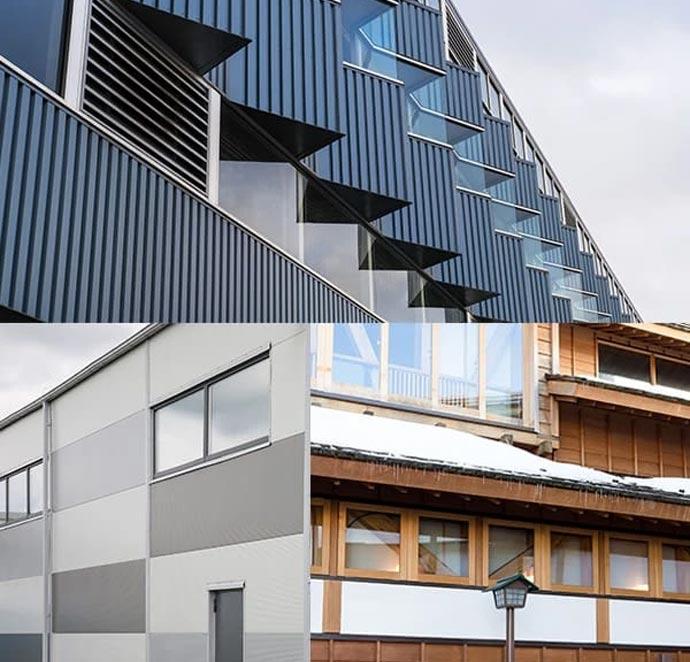
Large commercial buildings, roofing systems, façades, wall assemblies, flooring, interior fit-outs, and modular structures may use thousands or even hundreds of thousands of screws. At that scale, even small differences in quality, failure rate, or installation consistency can translate into meaningful changes in cost, labor, and waste.
2. Maintenance frequency affects long-term carbon and cost performance
When screws fail early, the result is not limited to material replacement. There is also the added labor, transport, packaging, access work, and repeated service activity associated with maintenance. Over time, these factors increase both total ownership cost and environmental burden.
3. Green building increasingly values repairability and disassembly
More projects are being designed with adaptability in mind. Modular construction, prefabricated systems, and future-ready buildings all benefit from fastening methods that support maintenance, replacement, and system upgrades without unnecessary destruction.
4. European markets are pushing transparency and supply chain accountability
In Europe, especially in Germany and the Nordic region, hardware is increasingly evaluated not only by price and specification but also by documentation, chemical compliance, responsible sourcing, and supply chain transparency. This is changing the role of the construction screw in export-oriented procurement.
What Typically Defines a More Sustainable Construction Screw?
There may not be a single universal definition of a “sustainable screw,” but in practice, screws that better align with green building and ESG-oriented procurement tend to share several characteristics.
High corrosion resistance
In humid, outdoor, coastal, or high-exposure environments, corrosion resistance has a direct influence on service life. The longer a screw performs reliably, the less frequently it needs to be replaced, which helps reduce maintenance interventions, material waste, and associated emissions.
Environmentally aligned surface treatment
Surface treatment matters not only for performance but also for compliance. Screws that avoid hexavalent chromium and support RoHS-related expectations are often better positioned for environmentally sensitive markets and projects with stricter procurement standards.
Design that supports removal and future maintenance
Not every application requires removability, but in systems designed for serviceability, upgrades, or modular replacement, fasteners that can be removed more efficiently offer clear lifecycle advantages. They help reduce demolition damage and support circular building principles.
Better traceability of material sources
As buyers pay more attention to embodied carbon and responsible sourcing, traceability becomes more relevant. Information about steel origin, recycled content, or lower-carbon material options can strengthen a product’s position in ESG-driven procurement.
Reduced packaging waste
Sustainability is not limited to the product itself. For high-volume fastener orders, packaging design can influence waste generation at the jobsite. More efficient and lower-plastic packaging contributes to cleaner site management and improved waste control.
A Market Shift Is Already Underway: Procurement Requirements Are Rising
One of the most important trends in the construction supply chain is that sustainability expectations are moving from brand messaging into actual procurement criteria.
In parts of Europe, building hardware is increasingly evaluated together with:
- environmental compliance documentation
- coating and performance test reports
- responsible supply chain statements
- material traceability information
- carbon-related declarations in selected projects
For many Asian suppliers, this represents a structural shift in market access. Competition is no longer based only on cost and delivery. It increasingly depends on whether a manufacturer can also provide consistency, technical reliability, documentation support, and a credible ESG response.
On-Site Performance Still Matters Most: Green Building Needs Lower-Waste Fixing Solutions
From a practical construction standpoint, green building does not benefit from sustainability claims alone. It benefits from fastening solutions that reduce waste, improve installation efficiency, and minimize the likelihood of rework.
That is why construction screw selection is expanding beyond simple holding power and into broader jobsite performance.
Common project needs and the screw characteristics behind them
| Project Need |
Why It Matters |
Preferred Construction Screw Characteristics |
| Fast and consistent installation |
Reduces labor time and energy use |
Smooth driving, reliable thread design, consistent quality |
| Long anti-corrosion life |
Lowers future maintenance demand |
Stable coating performance and durability |
| Easier repair and replacement |
Supports long-term building adaptability |
Removable or maintenance-friendly design |
| Compliance readiness |
Improves suitability for tenders and export markets |
RoHS-aligned treatment and supporting documentation |
| Lower site waste |
Reduces material loss and packaging burden |
Efficient packaging and low failure rate |
For project managers, the value is straightforward: fewer errors, fewer repairs, less material loss, and better lifecycle control.
FAQ: Common Industry Questions About Sustainable Screws
1. Is “sustainable screw” just a new marketing term?
Not entirely. While some branding language can be vague, the underlying issues—durability, compliance, repairability, and supply chain transparency—are increasingly real procurement concerns.
2. Why would a small fastener matter in carbon management?
Because lifecycle carbon is affected not only by major materials, but also by maintenance frequency, replacement cycles, logistics, and waste. A more durable screw can reduce repeated intervention over time.
3. Should buyers prioritize unit price or long-term performance?
For projects where durability, compliance, and long-term maintenance matter, focusing only on unit price is often short-sighted. Lifecycle cost and risk exposure usually provide a better decision framework.
4. Why is hexavalent chromium-free treatment important?
Because environmental and chemical compliance requirements are tightening in many markets. Surface treatments that align better with RoHS-related expectations are increasingly important for market acceptance.
5. Are removable screws suitable for every project?
No. Application requirements still vary. However, in modular systems and buildings designed for future maintenance or upgrades, removable fastening is becoming more valuable.
6. What is the biggest challenge for Asian suppliers in this trend?
The challenge is often not manufacturing itself, but the ability to combine product performance with stable quality, technical validation, compliance support, and clear documentation.
Taiwan’s Building Fastener Suppliers Are Also Evolving
As sustainability and transparency become more important in construction procurement, Taiwan’s building fastener manufacturers are also being pushed to move beyond pure production and into more integrated technical roles.
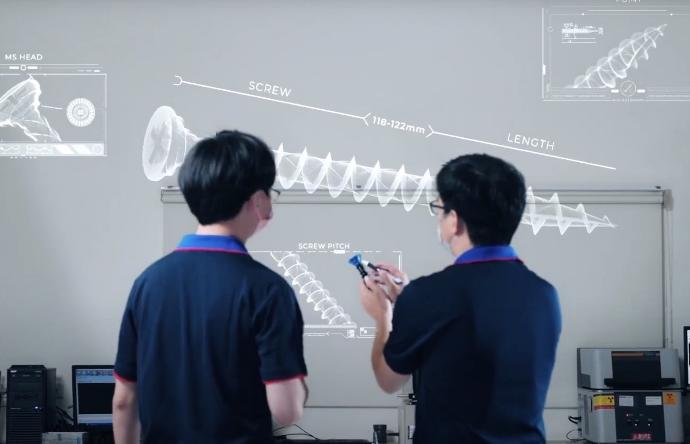
Fong Prean Industrial Co., Ltd. is one example of this transition. The company has long focused on construction screws, application development, and OEM screw manufacturing, while emphasizing R&D capability, product consistency, and alignment with global market needs. For buyers seeking a construction screw partner that can support both product performance and changing market expectations, this kind of manufacturing profile may become increasingly relevant.
Conclusion: Sustainable Construction Is Becoming a Detail-Driven Competition
As the market moves from asking “Does this project use green materials?” to asking “Can this system last longer, waste less, and perform better over time?”, the rules of competition are changing.
That is why screws deserve renewed attention. They are not suddenly important because they are expensive. They are important because in a lifecycle-driven, ESG-aware construction market, any high-volume component that affects durability, maintenance, compliance, and waste can no longer be treated as insignificant.
Seen from this perspective, the construction screw has become part of a much larger conversation about how the construction industry builds for the future.