Global demand for air powered impact wrenches is evolving in 2026 as buyers focus more on application fit, durability, supply stability, and long-term value. This article explores regional demand shifts, cordless competition, and what procurement teams should prioritize when selecting suppliers.
By 2026, the global fastening tools market is not simply “growing” , it is becoming more structurally selective. The air powered impact wrench continues to hold a stable position in industrial applications, but buyers are now more precise in how they evaluate tools. Instead of buying broadly, they are looking more carefully at whether a tool truly fits a specific job environment and delivers measurable operational value.
For procurement teams, factory managers, maintenance supervisors, and industrial distributors, the real question is no longer just whether to buy an impact wrench. It is now about:
- Which type best fits the application?
- In which working environments does a pneumatic tool still make the most sense?
- What kind of supplier can reduce downtime, control cost, and support long-term reliability?
This shift is being shaped by three major forces in 2026:
- Continued infrastructure and manufacturing expansion in Asia-Pacific
- Higher buyer expectations around durability, safety, and operator comfort
- Growing competition from cordless tools in selected use cases
So the key issue in 2026 is not whether demand exists, but where demand is moving, which applications remain strong, and what supplier capabilities buyers now prioritize.
If you are evaluating product sourcing, planning a product line, or looking for long-term supply partners, this article outlines how demand for air powered impact wrenches is changing, what buyers now care about most, and how an air impact wrench manufacturer can respond to these market shifts.
Why Air Powered Impact Wrenches Still Matter in 2026
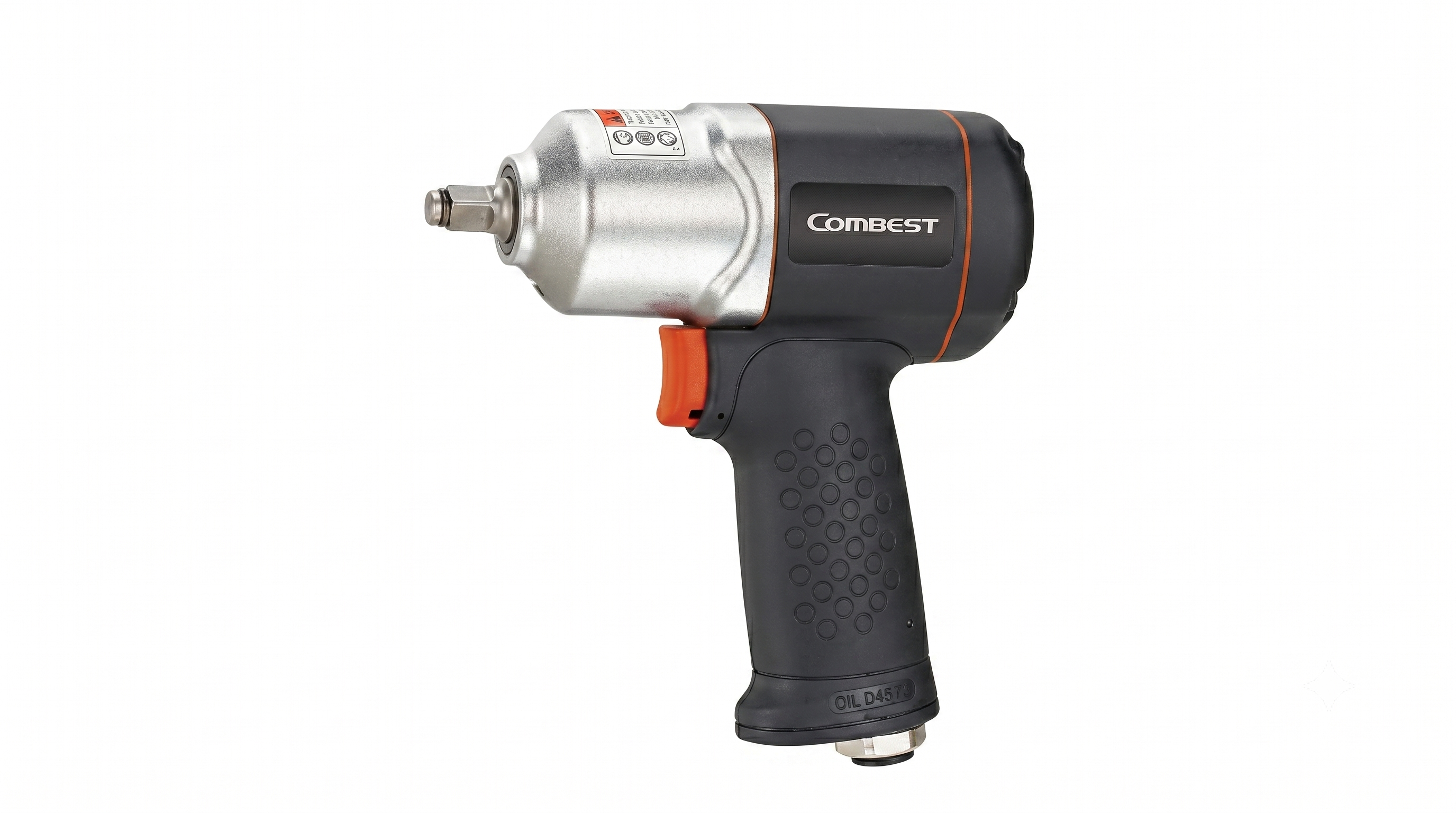
Although cordless power tools have grown rapidly in recent years, pneumatic impact wrenches still hold strong value in many professional environments. They remain particularly competitive where high torque, continuous operation, stable output, and relatively lighter tool weight are important.
They are still widely used in environments such as:
- Assembly lines
- Tire and automotive service stations
- Heavy vehicle maintenance
- Metalworking facilities
- Industrial repair and maintenance operations
A well-matched air powered impact wrench remains relevant for several practical reasons:
- It can deliver strong and consistent torque output
- It avoids battery-related interruptions in high-frequency use
- It may be lighter than some high-torque cordless alternatives
- It is especially suitable for facilities that already have compressed air systems
- It supports long working cycles with less operational complexity
At the same time, buyer expectations are becoming more application-specific. Procurement teams are less willing to purchase generic tools without clear use-case fit. Instead, they are paying closer attention to:
- Whether the torque range suits the job
- Whether the ergonomic design reduces fatigue
- Whether maintenance is easy to manage
- Whether the tool can support long-duration use
A Key Market Signal: The Tool Market Is Growing, but Buyer Logic Has Changed
Looking at the broader tool industry helps explain why this category still deserves attention. According to Mordor Intelligence, the global power tools market is projected to reach USD 81.73 billion in 2026 and USD 113.56 billion by 2031, with a CAGR of around 6.80%.
Within that broader market, drilling and fastening tools remain a major category. More notably, impact drivers and wrenches are identified as one of the fastest-growing subsegments, with projected growth of around 8.05% through 2031.
This suggests that market expansion is not happening evenly across all tool categories. Buyers are increasingly willing to allocate budget to tools that can clearly improve efficiency, reduce labor strain, and lower rework risk.
Precedence Research also reports that the global power tools market was valued at around USD 36.6 billion in 2025 and is expected to continue growing through 2035. While research methodologies differ, both sources point to the same conclusion: fastening tools remain a critical category in industrial and professional markets.
Where Is Global Demand for Air Powered Impact Wrenches Moving in 2026?
The most important question in 2026 is not whether demand still exists, but where it is shifting.
Asia-Pacific Is Becoming the Main Growth Engine
Mordor Intelligence notes that Asia-Pacific was already the largest regional power tools market in 2025, accounting for about 38.86% of the global market, and is also the fastest-growing region, with a projected CAGR of 7.85% through 2031.
This matters greatly for pneumatic impact wrenches because the region’s growth is being supported by:
- Infrastructure expansion
- Manufacturing capacity growth
- Rising automotive supply chain activity
- Increased investment in metalworking and industrial production
- Continued development of export-oriented manufacturing
As a result, buyers in Asia-Pacific are not just buying more tools — they are also demanding broader product ranges, more stable product quality, and designs better aligned with actual use conditions.
Even in price-sensitive markets, the more attractive demand is increasingly shifting toward tools that offer:
- Better grip comfort
- Longer service life
- Lower vibration
- More application-specific torque performance
North America and Europe Are Becoming More Selective
In North America and Europe, the issue is not just volume, but replacement logic. Buyers in these mature markets are comparing pneumatic, corded, and cordless tools more carefully than before.
In these markets, the air powered impact wrench still fits well in applications such as:
- Tire service shops
- Truck and commercial vehicle maintenance
- Fleet servicing
- Industrial MRO operations
- Assembly environments with existing compressed air infrastructure
But buyer questions are becoming more specific:
- Is torque stable during repetitive use?
- Are maintenance and replacement parts easy to manage?
- Can vibration and operator fatigue be reduced?
- Does the supplier offer OEM / ODM capability?
- Can the tool meet both safety and productivity requirements?
This means the products most likely to win repeat orders in mature markets are not necessarily the cheapest, but the ones that reduce operational and procurement risk.
Emerging Markets Are Looking Beyond Price Alone
In Southeast Asia, Latin America, the Middle East, and parts of Africa, price remains important — but by 2026, “value” means more than a low quote.
Buyers are increasingly paying attention to:
- Whether torque is sufficient for the intended job
- Whether the housing and internal structure are durable
- Whether batch quality is consistent
- Whether repairs and spare parts are accessible locally
- Whether delivery and supply stability are reliable
In these markets, the suppliers most likely to succeed are not simply those with the lowest price, but those with stable manufacturing quality and the ability to support long-term supply relationships.
Why Is Demand Shifting This Way?
Several industry-side factors help explain the demand shift in 2026.
1. Vehicle Production and Service Demand Still Support the Category
Automotive and commercial vehicle industries remain important sources of demand for fastening tools. Whether in production, maintenance, repair, or aftermarket service, efficient fastening solutions continue to be necessary.
According to OICA production statistics for 2025, global production activity for passenger vehicles, commercial vehicles, buses, and heavy trucks remains active. Even though output differs by country, the broader vehicle ecosystem continues to support demand for pneumatic impact wrenches.
This supports steady demand in applications such as:
- Tire and wheel servicing
- Commercial vehicle repair
- Assembly and sub-assembly operations
- Industrial maintenance related to transport equipment
2. Infrastructure and Factory Investment Continue to Lift Professional Tool Demand
When infrastructure, plant construction, equipment installation, and related maintenance activity increase, demand for durable professional tools usually grows as well.
This is why broader tool market growth still matters for pneumatic categories. Even as cordless tools expand in some mobile use cases, pneumatic tools remain highly competitive in fixed workstations, repetitive fastening environments, and high-torque applications.
Before Choosing a Supplier, It Helps to Understand What Buyers Prioritize Most in 2026
The table below summarizes common evaluation factors and their relevance to pneumatic impact wrench purchasing decisions.
| Buyer Priority in 2026 |
Why It Matters |
Importance for Air Powered Impact Wrenches |
| Torque consistency |
Reduces fastening error and rework |
High |
| Durability under frequent use |
Extends tool life |
High |
| Ergonomics and weight |
Reduces fatigue and improves efficiency |
High |
| Vibration and noise control |
Supports safety and user acceptance |
Medium-High |
| Spare parts and serviceability |
Reduces downtime risk |
High |
| OEM / ODM flexibility |
Helps importers and brands differentiate |
Medium-High |
| Batch consistency |
Supports repeat purchasing confidence |
High |
| Price competitiveness |
Still important, but rarely enough on its own |
Medium |
This shows that the 2026 market is no longer satisfied with “available stock.” Buyers want tools that fit real working conditions and reduce operational friction.
How Cordless Competition Is Reshaping Pneumatic Tool Demand
Cordless tools are clearly growing. Across the wider tool market, they are gaining favor because they are more portable and reduce dependence on air hose systems.
But that does not mean pneumatic demand will disappear. More accurately, the market is moving toward application-based segmentation.
Where Cordless Tools Are More Likely to Grow
- Field repair work
- On-site construction and mobile jobs
- Lighter fastening applications
- Environments without compressed air systems
- Buyers seeking a unified battery platform
Where Pneumatic Tools Still Hold Clear Advantages
- Fixed workstations
- Tire shops and automotive service bays
- High-frequency, repetitive fastening tasks
- Factories with existing air systems
- Users who prioritize lighter tool weight and continuous run capability
So what is happening in 2026 is not a simple “pneumatic vs. cordless” outcome. Instead, the market is redistributing demand based on where each tool type performs best.
Supplier Selection: Global Brands, Specialist Manufacturers, and OEM/ODM Partners All Play Different Roles
In 2026, buyers are evaluating more than just tool specifications. They are also considering what type of supplier best fits their business model. In end-user repair markets and large industrial systems, internationally recognized brands such as Ingersoll Rand, Chicago Pneumatic, and Bosch are often part of the comparison set. But for buyers who care more about supply stability, customized specifications, private labeling, or long-term cost control, specialist manufacturing partners can be equally relevant.
For example, Taiwan-based KYMYO Industrial Co., Ltd. has been engaged in pneumatic tool manufacturing since 1986, offering multiple categories of pneumatic hand tools along with OEM / ODM support. For buyers looking for an air impact wrench manufacturer, the appeal of this type of supplier often lies less in brand visibility and more in production stability, export experience, manufacturing flexibility, and long-term cooperation potential.
For readers who want to explore related products, KYMYO’s air powered impact wrench page provides an example of this supplier category.
What Should Procurement Teams Do Next?
If your company is planning fastening tool purchases in 2026, the safest approach is not to rely only on catalogs and specification sheets. A more effective method is to build an evaluation checklist based on actual application requirements.
Recommended Evaluation Steps
- Define the real job requirements: torque, frequency of use, and duty cycle
- Separate mobile applications from fixed workstation needs
- Compare pneumatic and cordless tools based on total cost of ownership, not just trends
- Ask suppliers about inspection methods, spare parts availability, and batch consistency
- Evaluate weight, vibration, and noise if operators use the tool for long periods
- Confirm OEM / ODM capability early if branding or customization matters
- Test on a smaller scale before committing to large-volume purchasing
This helps avoid a common procurement mistake: relying on specification numbers alone while overlooking real-world tool performance.
FAQ: Common Questions About Air Powered Impact Wrench Purchasing in 2026
1.Is it still worth buying an air powered impact wrench in 2026?
Yes, especially in professional settings with existing compressed air systems, high tool usage frequency, and strong torque requirements. When continuous run capability and durability matter more than portability, pneumatic tools still offer clear advantages.
2.Is the market moving away from pneumatic tools altogether?
No. The market is not abandoning pneumatic tools, it is becoming more selective. Cordless tools are growing faster in mobile applications, but pneumatic impact wrenches still hold a stable place in factories, service stations, fleet maintenance, and high-load working environments.
3.Which regions deserve the most attention in 2026?
Asia-Pacific deserves the most attention because it is being driven by infrastructure expansion, manufacturing investment, and industrial growth. That said, North America and Europe remain important for replacement demand and professional-grade applications.
4.What matters most when choosing an air impact wrench manufacturer?
Beyond price, buyers should evaluate torque consistency, manufacturing quality, ergonomic design, inspection standards, spare parts and service support, OEM / ODM capability, and suitability for long-term cooperation.
5.Will pneumatic impact wrenches be fully replaced by cordless tools in the future?
Unlikely. Cordless tools will continue to grow in mobile and lighter-duty applications, but pneumatic tools are still expected to remain strong in high-frequency, fixed-station, and compressed-air-supported professional environments.
6.What kind of supplier should buyers prioritize in 2026?
Buyers should prioritize suppliers with strong product specialization, stable quality, service and spare parts support, export experience, and a practical understanding of industrial applications, not just the lowest quoted price.
Final Takeaway: In 2026, the Market Rewards Fit, Not Hype
The global trend in 2026 is not that demand for pneumatic impact wrenches is disappearing. Rather, demand is becoming more selective, more segmented, and more closely tied to real operating conditions.
Asia-Pacific is the clearest growth center, while mature markets are becoming more precise and demanding. Cordless competition is real, but in environments that require continuous operation, existing compressed air infrastructure, and stable high torque, pneumatic tools still deliver meaningful value.
In other words, the future of the air powered impact wrench will not be determined by trend alone, but by application fit.
For buyers, distributors, and manufacturers, the companies most likely to succeed in 2026 will not necessarily be those with the loudest messaging, but those that understand end-use requirements, can demonstrate operational value, and align product design with actual industrial needs.
From that perspective, working with an air impact wrench manufacturer that offers export experience, quality control capability, and product focus remains a practical and strategic choice.