As electric vehicles enter mainstream workshops, tool selection is becoming part of high-voltage risk control.
Electric vehicles are changing more than powertrains. They are also changing the training, equipment, and work practices expected in automotive service facilities. A conventional technician mainly works around mechanical systems and low-voltage electronics. An EV technician may perform many of the same tasks while working near a traction battery, inverter, electric motor, high-voltage cables, and other components connected to a higher-energy electrical architecture.
This shift is increasing demand for fully insulated hand tools. The trend is not about replacing every ordinary wrench with a coated version. It reflects a broader effort to reduce accidental conductive contact, standardize workshop safety, and equip trained personnel for tasks performed near high-voltage components.
A Larger EV Fleet Means More High-Voltage Service
The International Energy Agency reports that electric car sales exceeded 20 million in 2025, representing about one-quarter of new cars sold worldwide. As this vehicle population grows and ages, more EVs will require inspections, collision repair, component replacement, and maintenance outside their original sales channels. n is therefore spreading beyond specialist dealerships. Independent workshops, fleet departments, collision centers, vocational schools, and roadside service providers are developing high-voltage capabilities. The U.S. Alternative Fuels Data Center notes that the growing number of electrified vehicles is pushing shops to learn new architectures and follow specific high-voltage safety protocols. ions also create a need for consistent tool policies. Clearly identified, voltage-rated tools reduce the chance that unsuitable general-purpose equipment enters a controlled work area.
Why Ordinary Hand Tools Are Not Enough
Most automotive hand tools are made from conductive metal. A rubber or plastic comfort grip does not automatically make a tool electrically insulated, nor does it prove that the tool has been tested for use near energized parts. Exposed metal, damaged coating, contamination, or an unprotected adjustment mechanism can create an unintended conductive path.
Electrical safety should still begin with de-energizing. OSHA states that live parts should generally be de-energized before work and that parts not properly locked or tagged must be treated as energized. It also requires insulated tools when a tool could contact exposed energized conductors or circuit parts. V does not by itself confirm that every high-voltage area is safe. Manufacturer procedures may require isolation, waiting periods, lockout controls, and voltage verification. Insulated tools add protection but do not replace these steps.
What Fully Insulated Design Changes
IEC 60900 applies to insulated, insulating, and hybrid hand tools intended for live working or work close to live parts at nominal voltages up to 1,000 V AC and 1,500 V DC. The standard also emphasizes that such tools contribute to safety only when skilled persons use them with appropriate methods and instructions. tool generally covers more of the conductive body than a comfort-grip or partially insulated design. Depending on the tool, only the functional surfaces needed to engage a fastener may remain exposed. This broader coverage can reduce the amount of accessible metal that might accidentally contact a nearby energized component.
| Tool type |
Typical construction |
Practical meaning |
| Conventional tool |
Exposed metal, sometimes with a comfort grip |
Suitable for mechanical work, but not automatically voltage-rated |
| Rated insulated tool |
Insulation designed and tested for a stated standard |
Supports specified electrical tasks within a complete safety procedure |
| Fully insulated tool |
Insulation covers most nonfunctional metal surfaces |
Reduces exposed conductive area in confined or complex work zones |
The exact rating must be confirmed from product markings and documentation. “Fully insulated” should never be interpreted as permission to ignore voltage limits, inspection requirements, or safe procedures.
Why Adjustable Wrenches Are Relevant to EV Workshops
EV service can involve limited access, mixed fastener sizes, and components close to cables, terminals, or housings. An adjustable wrench handles several hex sizes without repeated tool changes, which can be useful in mobile or controlled high-voltage kits.
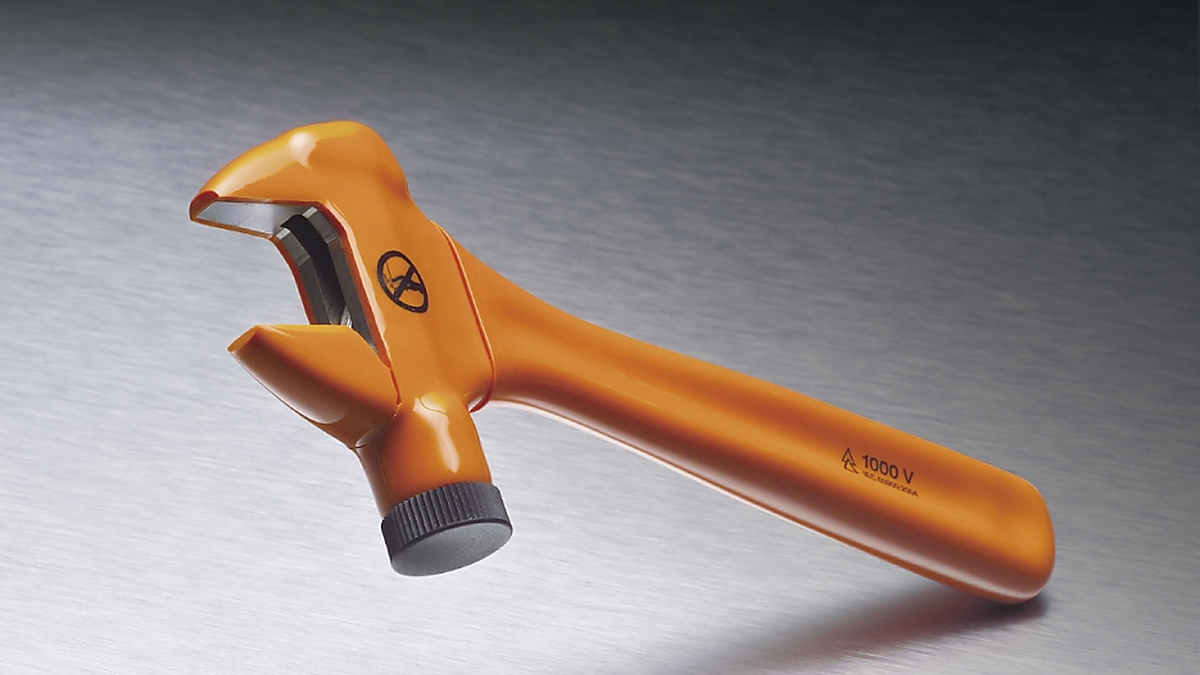
A fully insulated adjustable wrench extends protective material around the handle and much of the tool body while retaining the jaw’s mechanical function. It can therefore reduce exposed conductive surface near surrounding components.
However, it is not the best choice for every connection. Fixed-size insulated spanners, sockets, or torque tools may provide better engagement and repeatability for high-torque or torque-critical fasteners. Selection should follow the vehicle manufacturer’s repair procedure, torque specification, access conditions, and risk assessment.
Demand Is Moving Toward Managed Tool Systems
Professional workshops increasingly treat insulated tools as a managed safety system. This includes recognized markings, separate storage, pre-use inspection, protection from abrasion, and removal of damaged tools. Oil, moisture, metal particles, and harsh chemicals may also affect tool condition.
Purchasing teams must therefore look beyond a coated handle and consider the standard, rated voltage, insulation coverage, traceable markings, fastener compatibility, and real service conditions.
FAQ
1. Are fully insulated tools required for every EV repair?
No. Tire, suspension, trim, body, and some low-voltage tasks may not require them. Tool selection depends on the component, work zone, manufacturer procedure, and electrical hazard.
2. Is a rubber-handled wrench an insulated wrench?
Not necessarily. A comfort grip provides no verified electrical rating. Electrical tools should carry clear standard and voltage markings supported by technical documentation.
3. Can insulated tools replace electrical gloves?
No. Tools, gloves, face protection, barriers, and safe procedures address different risks. Required PPE should follow regulations, the employer’s safety program, and OEM instructions.
4. Must an EV be de-energized before service?
High-voltage systems should generally be isolated and verified before relevant work. Energized diagnostics should be limited to trained, authorized personnel using task-specific controls.
5. How should insulated tools be inspected?
Check for cracks, cuts, worn insulation, exposed metal, deformation, contamination, and unreadable markings. Damaged tools should be removed from service.
6. Why use a fully insulated adjustable wrench?
It can handle multiple fastener sizes while reducing exposed conductive surface. Fixed-size or torque-controlled tools may still be preferable for critical connections.
Conclusion
EV growth is making electrical safety a routine workshop consideration across dealership, fleet, collision, and independent repair channels.
Fully insulated hand tools help by limiting accessible conductive surfaces and providing verified protection when correctly rated, inspected, and used. Their value is greatest when combined with training, de-energization, voltage verification, PPE, controlled storage, and vehicle-specific repair instructions.
For professional buyers evaluating a versatile option for electrically sensitive service environments, the Proxene Tools SI Series Full Insulated Adjustable Wrench provides a useful reference for comparing voltage approval, insulation coverage, jaw capacity, and adjustment features.

(4059)(20260924)(原).jpg)
(2367)(20260924)(原).jpg)